
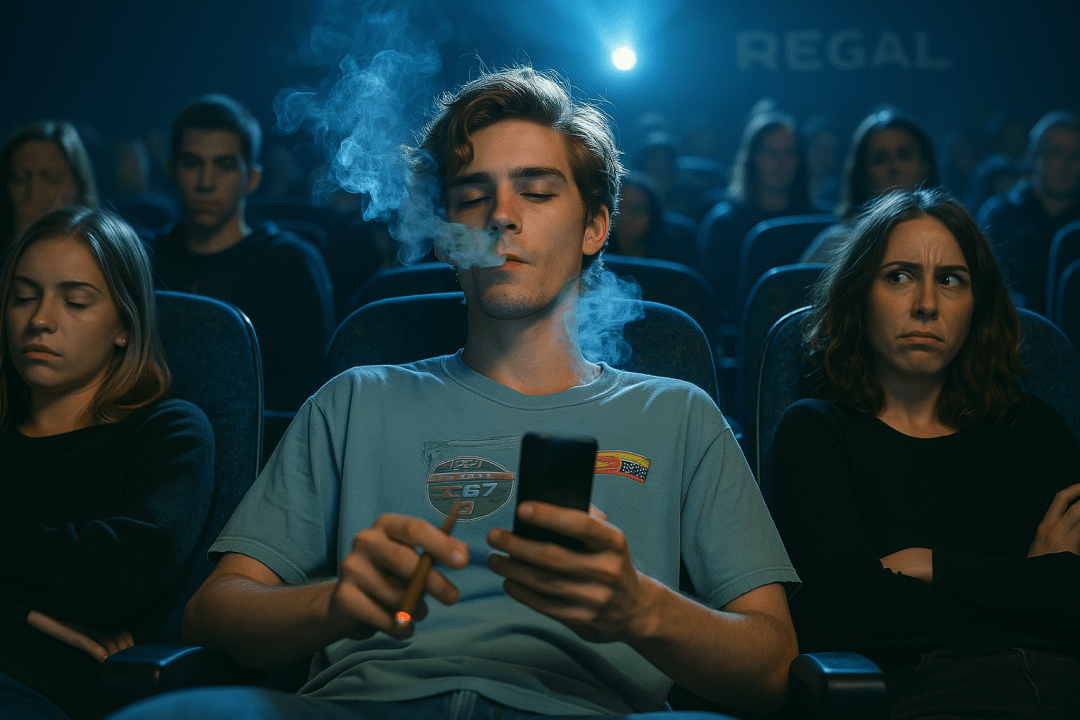
I wasn’t shocked. I didn’t clutch my pearls or gasp or drop my popcorn in stunned disbelief. I just sighed and thought, “C’mon… really?” When I heard Regal’s CEO Eduardo Acuna joke about maybe testing out things like texting-friendly auditoriums and selling weed in theaters to attract younger audiences, it didn’t even register as outrageous—it just felt like another swing and a miss from an industry that’s way too comfortable ignoring what its audience actually wants.
And look, I remember 1996. Half Baked came out, and people absolutely lit up in theaters for that movie. It was an R-rated stoner comedy in the mid-’90s—nobody expected decorum. But that was a different time. That was cultural. What Regal’s floating now isn’t a vibe—it’s a symptom of a business so out of touch with its own value that it thinks turning theaters into vape lounges might be the answer to declining ticket sales.
It’s hard not to roll your eyes when these executives say the quiet part out loud. Because for years now, moviegoers—especially fans who still actually care about the theater experience—have been telling them exactly what’s wrong. And it’s not that theaters are too quiet or that the snacks aren’t potent enough. It’s the prices. It’s the inconsistency. It’s the fact that the experience has gotten worse while the cost has gone up. We don’t want gimmicks. We want value.
And yet, instead of even attempting to meet people halfway, we get jokes about texting and cannabis in the aisles. Like that’s going to make a family of four drop $80 on a Tuesday night to see a PG-13 sequel. It’s the same kind of mindset that gave us AMC’s infamous “Sightline” program—the brilliant idea to charge more for the best seats in the house, like we’re boarding a budget airline instead of watching a movie. That didn’t last long, but the fact that it even happened says so much about where the industry’s head is at.
And through it all, the message to audiences is clear: “We’ll do anything but lower prices or make the experience better.”
Meanwhile, studios are cranking out $200 million blockbusters with stories stitched together by committee, and somehow still act surprised when audiences wait for streaming. You think people don’t want to go to the movies anymore? They do. They just don’t want to feel like idiots for doing it.
Especially now, with the economic pressure ramping up again. Tariffs hit hard on Liberation Day, costs are up across the board, and middle-class families are making hard choices about where their money goes. And when the theaters keep treating the act of showing up like some boutique, VIP experience instead of a regular night out, it becomes pretty easy to just stay home. Especially when the alternative is shelling out $60–70 bucks just to watch something next to a guy scrolling Instagram while vaping blueberry mango mist.
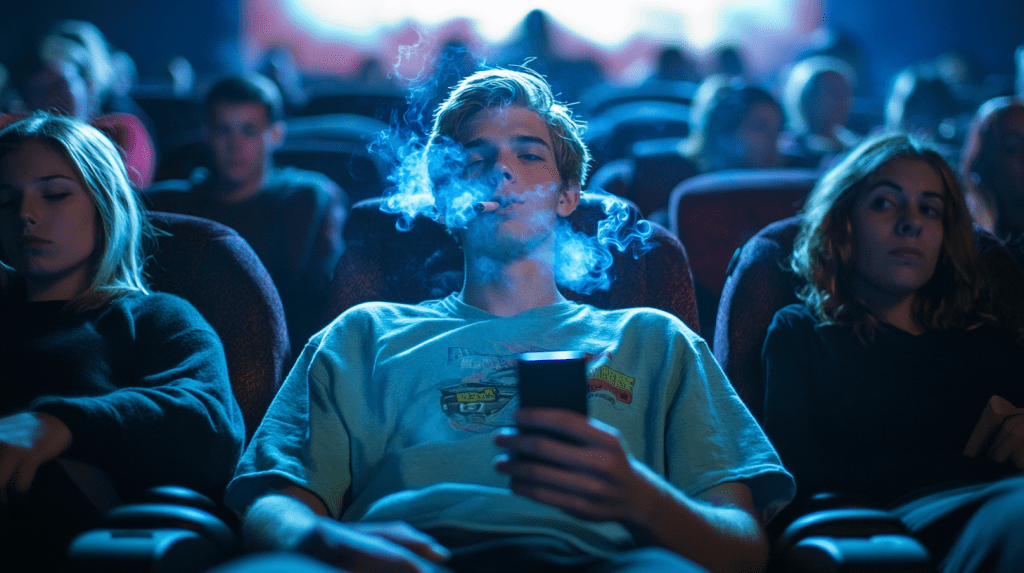
And here’s the kicker: movie fans still want to care. We want theaters to survive. We want the communal experience, the big screen, the booming sound. We want it to be something we can do regularly, not just on special occasions when the stars align and our wallets agree. But when executives joke about lighting up in the back row instead of addressing the real reasons people are staying away, it’s hard not to feel like they’ve already given up.
It’s not that they’re failing to save the theatrical experience. It’s that they’re actively refusing to.
You want people to come back to theaters? Make the experience consistent. Make the prices make sense. Stop treating your most loyal customers like they’re the problem, and start listening to what they’re actually asking for. If you make going to the movies feel good again—feel worth it—people will show up. It’s really that simple.
Instead, what we get is a slow drift into chaos. Theaters trying to reinvent themselves as clubs, arcades, event spaces—anything but what they actually are. Studios pouring fortunes into forgettable tentpoles, praying for lightning to strike. And the rest of us? We’re stuck in the middle. Movie fans who grew up loving this space, now watching it twist itself into something unrecognizable, all while being told we’re the ones letting it die.
So yeah, when I hear a theater CEO float ideas like texting and selling weed as some kind of salvation, I don’t get shocked. I just get tired. Tired of watching something I care about be mishandled by people who clearly don’t. And I start to wonder—if they’re not taking this seriously, why the hell should I?
And before anyone says it—yes, studios are part of the problem too. They’re not just innocent victims of shifting audience behavior. They’ve doubled down on a model that relies on bloated budgets, franchise fatigue, and endless IP recycling, where every movie has to make a billion dollars or it’s a failure. Look at the number of tentpoles crossing the $200 million budget line lately—it’s not just unsustainable, it’s irrational. It forces studios to push for early PVOD drops, desperate to make up the shortfall. And who pays for that mistake? We do. At the box office, at home, and in the loss of mid-budget films that used to define entire eras of cinema.

Take Wicked, for example. Great movie, sure, and it made a killing in theaters. But then it dropped on PVOD and reportedly raked in over $70 million in its first week. That’s the kind of number that makes executives foam at the mouth—and makes you realize how quickly the equation has changed. Why keep a movie in theaters for 90 days when it can double-dip so fast? It’s pure math. But it also quietly sends a message to audiences: “You’re not that important. The real money’s coming later.”
And yet we’re the ones being told to save cinema. We’re the ones asked to “show up” or else lose something culturally irreplaceable. But when that same culture is being bent around revenue-maximizing tactics, when theater chains would rather toy with absurd ideas than address the core problems, it starts to feel like the fight isn’t worth it.
Because here’s the thing: I want movie theaters to thrive. I want new generations to fall in love with seeing a film on the big screen. I want to go on a Tuesday night with a friend or a date or my kids and not feel like I’m weighing the cost of the outing against my utility bill. But that can’t happen if the people running the show keep acting like they’re above accountability—or worse, like they’re completely disconnected from reality.
Texting during movies and selling weed in the theater isn’t edgy. It isn’t youth outreach. It’s lazy. It’s the business version of a shrug. And it’s emblematic of a much deeper problem: the belief that the theater experience needs to be turned into something else in order to survive.
But what if it doesn’t?
What if all it needs to be is better? What if theaters made going to the movies feel like something worth your time and money again, instead of a luxury you have to justify? What if they stopped chasing spectacle and novelty, and actually just focused on quality, consistency, and care?
Until then, I’m not going to feel bad about staying home. I’m not going to feel guilty for skipping the theater when the people in charge keep turning it into a parody of itself. I’m tired of being asked to care more than they do.
Because if Regal, AMC, the studios, and the rest of this ecosystem want movie fans to fight for the theatrical experience, then they need to give us something worth fighting for.


