
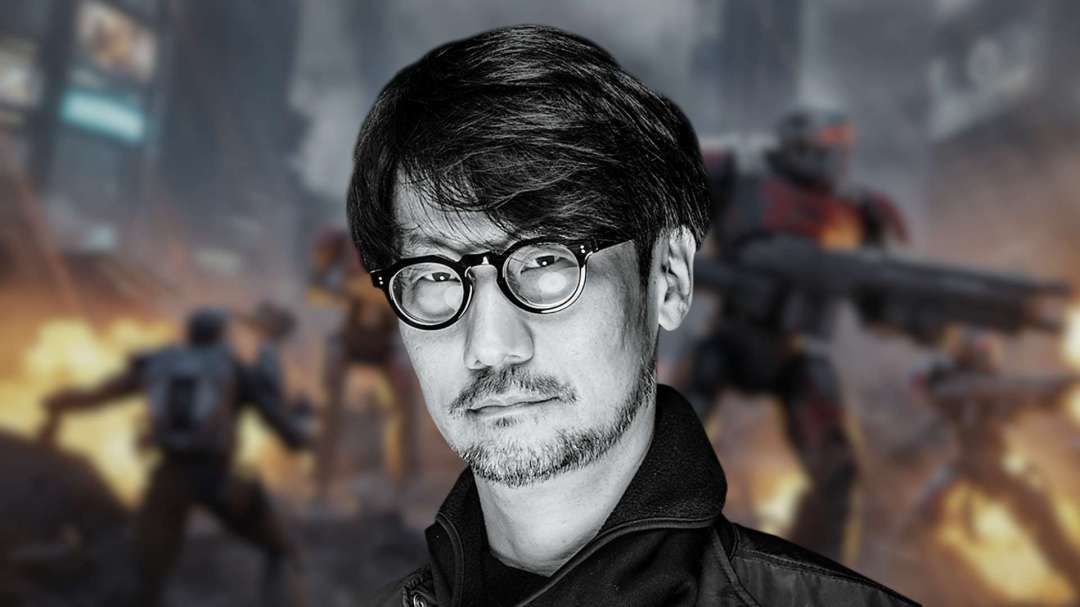
Hideo Kojima has always been a futurist wrapped in paranoia. The man who built Metal Gear Solid 2 around the dangers of digital manipulation and then turned Death Stranding into a story about isolation through over-connection has never trusted the algorithmic tide. For two decades he’s been warning that technology’s convenience would quietly become its own form of control. So when Kojima starts referring to artificial intelligence as a “friend,” it’s not just a surprise — it’s a signal.
Because if he’s making peace with the machine, everyone else is already halfway there.
This year, Kojima’s tone on AI shifted in a way that feels less like surrender and more like acceptance. He told Denfaminicogamer that he still “kind of hates” AI assistants that try to predict your next move because they rob life of its spontaneity — a recurring obsession in his work. But a few months later, talking to The Washington Post, his language changed. He described AI as “bitter medicine,” something humanity must learn to live with if we’re going to thrive in the 21st century. And then came the unexpected word: friend. Not tool, not threat — friend.
It’s an odd but honest word. Kojima has never been the type to bow to trends. When he says something like that, it’s not PR — it’s philosophy. He knows the same thing most of us working with AI know: it’s not about replacing creativity, it’s about refining it. A person can have the sharpest tools in the world and still produce garbage. What matters is who’s holding them. The same way a sculptor and a novice can both pick up a chisel, only one of them knows how to make it sing. AI is no different. It doesn’t cheapen art — it just exposes who actually understands the craft.
That, I think, is what Kojima’s getting at. The machine isn’t here to make you obsolete; it’s here to reveal whether you have any skill to begin with. The people who panic about AI “stealing creativity” often aren’t afraid of the tech — they’re afraid of being unmasked. Artists adapt. Hacks complain. And Kojima has never been a hack.
It’s funny watching the conversation shift. Just two years ago, the 2023 strikes had Hollywood locked in a panic over AI like it was Skynet with a Screen Actors Guild card. The message was clear: AI was the death of art, the corporate cudgel that would flatten human expression. And while the fear was valid, the hysteria wasn’t. Because the reality is simpler — AI isn’t replacing creativity, it’s filtering it. The noise is getting louder, sure, but the signal? It’s still human.
Look around. Ryan Reynolds is using ChatGPT to experiment with ads and punch up scripts. Neil Druckmann talks about using AI to streamline game production so his team can focus on story. George Miller calls it “here to stay” without the drama. Even James Cameron, whose filmography practically invented our cultural anxiety about machines, has softened to the idea. The loudest resistance now mostly comes from people like Guillermo del Toro, whose disdain for AI sounds more like exhaustion than argument. I respect del Toro as a storyteller, but on this one, he’s wrong. AI isn’t soulless or lazy or a threat to imagination — it’s a mirror. It reflects the person using it. You get out what you put in.
And that’s what makes Kojima’s pivot so interesting. He’s not betraying his earlier fears about manipulation or control; he’s applying them. He’s saying that, yes, AI can be dangerous — but only if you stop thinking. Only if you hand it the wheel and walk away. What matters is the conversation you have with it. The awareness that the tool is powerful, unpredictable, and fallible — like every medium before it. Photography didn’t kill painting. Synthesizers didn’t kill music. AI won’t kill creativity. It’ll just force us to define it more clearly.
Kojima seems to understand that the real danger isn’t the machine. It’s complacency. And that’s why his shift feels less like hypocrisy and more like evolution. He’s not abandoning his core philosophy; he’s living it. The man who warned us about algorithmic control is now testing whether control can coexist with imagination. Whether human intent can still matter in an age of predictive output.
He’s not alone. The industry is moving past the panic. The fear-mongering from 2023 has burned off, and what’s left are the builders — the ones who see AI not as an existential threat but as another instrument in the creative arsenal. Kojima, in his usual way, just got there early. He’s experimenting with the thing everyone else is still debating, finding humanity inside the circuitry.
It’s fitting, really. The guy who made an entire career out of warning us about the future is now quietly helping define it.
And if even Hideo Kojima is learning to befriend the machine, maybe it’s not a sign of the end of art. Maybe it’s proof that art is finally catching up to reality.

 Hollywood After Dark