
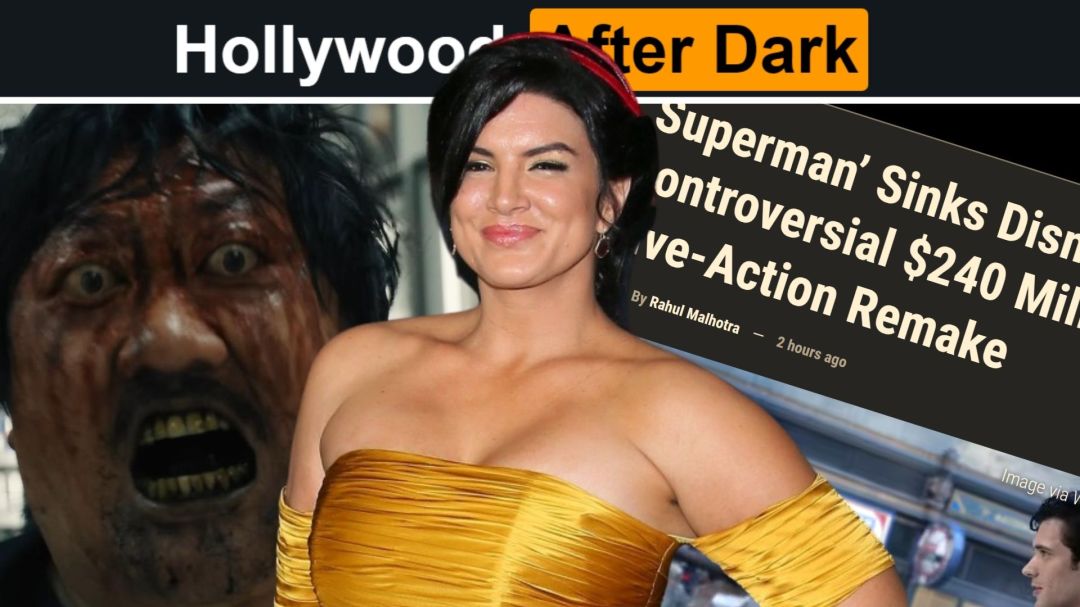
Tonight’s Hollywood After Dark wasted no time getting into one of the week’s juiciest headlines: Gina Carano’s settlement with Disney. It’s the kind of story that plays perfectly in culture war circles, but as always, the truth is far messier than the spin. On paper, Carano walked away with $750,000 and a carefully worded “future opportunities” line from Disney and Lucasfilm. It sounds like a win—and her supporters are already treating it like one—but a closer look says otherwise.
This wasn’t about Disney crawling back on bended knee. This was about cost. The trial was set for September, millions had already been burned on pre-litigation, and Disney decided it was cheaper to settle than to drag the fight out any longer. There was no admission of wrongdoing, no grand apology, no guarantee of her returning to The Mandalorian. If anything, the statement was a polite way of saying, “You’re hireable again if someone wants you.” That’s a far cry from reclaiming her old role or having Hollywood throw open its doors.
We also dug into the Elon Musk factor—because yes, he bankrolled her lawsuit. Not out of some deep friendship (she’s admitted she’s never met him), but because taking a swing at Bob Iger fit neatly into his ongoing “stick it to Disney” PR tour. It’s a move straight out of the Peter Thiel vs. Gawker playbook—except this time the moral high ground is a lot harder to find.
From there, the conversation shifted to the state of movie talk itself, and spoiler alert: it’s not in great shape. What used to be a space for passionate discussion has been overrun by toxic positivity, tribal echo chambers, and people treating box office numbers like NFL stats. You’re either “for” a film or “against” it, and the nuance of actually discussing the art is gone. Social media platforms have only made it worse, turning every opinion into an engagement game. Loud outrage gets clicks. So does hollow cheerleading. Real conversation? That’s buried under algorithms and hot takes designed to farm reactions, not insight.
It’s not just negativity driving this either—over-the-top toxic positivity can be just as damaging. When every flaw gets hand-waved away because a project aligns with your “team,” it becomes impossible to have an honest conversation. Media literacy takes a back seat, and the only metric that matters is whether your side “wins” the weekend box office.
Finally, we dug into the DC rumor mill, where James Gunn found himself shutting down reports that Robin will appear in The Batman Part 2. The source? Scooper Jeff Sneider, who has a track record that swings between solid and laughably off-base. Gunn’s denial was blunt, but here’s the thing: as co-head of DC Studios, his job is to protect the film—even if that means misleading the public. That’s not speculation; that’s just how the industry works.
We’ve seen it before. Henry Cavill’s Superman cameos were filmed in hours, kept secret until the marketing plan needed them, and then walked back when the corporate strategy shifted. Studios, scoopers, and insiders are all playing their own games, and the audience is rarely getting the full truth until it’s time to buy a ticket.
So no, you shouldn’t take Sneider’s rumor as gospel. But you also shouldn’t take Gunn’s denial at face value. Until there are set photos, an official trailer, or the movie is in theaters, everything is still in the “we’ll see” category.
This episode was all about cutting through the noise—whether it’s culture war spin, fandom tribalism, or the PR fog that hangs over blockbuster filmmaking. If you want sugar-coated takes, you won’t find them here.

 Hollywood After Dark