
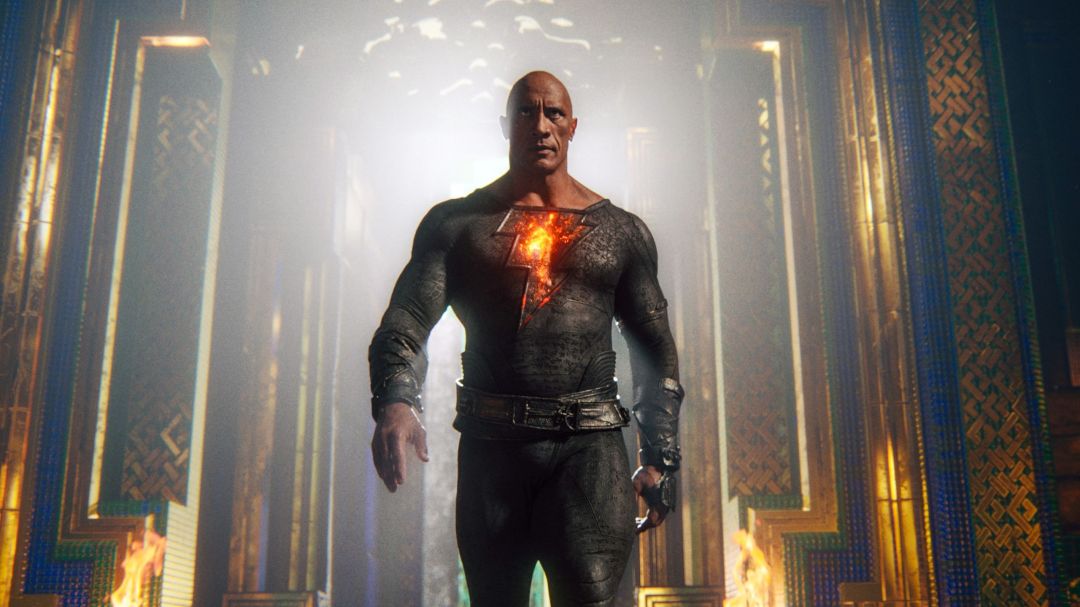
Dwayne “The Rock” Johnson is not a movie star. There, I said it. Cue the pitchforks and protein shake-fueled Twitter rants. But let’s get real — the guy’s got charisma, sure, and he moves merch like nobody’s business, but when it comes to actual box office dominance? The numbers don’t lie. And neither does Black Adam. For all its hype, muscle-flexing, and PR stunts, it ended up being the high-profile misfire that exposed one of the most audacious power grabs in modern blockbuster history.
See, Black Adam didn’t flop — not really. It opened to $67 million in the U.S. back in October 2022, held the number one box office spot for three straight weeks, and had some decent buzz behind it. Domestically, it held its own. But globally? Crickets. The movie limped to just under $400 million worldwide, which, considering its reported $200+ million budget plus marketing, is what the studio politely calls “disappointing.” But here’s where it gets interesting: the failure of Black Adam wasn’t just about dollars. It was about control. Specifically, who was going to control the future of DC on screen.
David Zaslav, the CEO of Warner Bros. Discovery and professional corporate machete wielder, had just taken over and was looking to clean house. DC was a mess. The Snyderverse was dead, The Flash was finished but stuck in PR purgatory thanks to Ezra Miller’s off-screen chaos, and nobody — not the fans, not the execs, not even the actors — knew what the hell was going on. Enter The Rock. Smelling opportunity like it was a freshly grilled cheat day steak, Johnson stepped in with a plan: make Black Adam the launching point for a new DC Universe with him as the crown jewel. And not just as an actor. Oh no. He wanted to run the damn thing.
Behind the scenes, Johnson was lobbying hard. He pushed for Henry Cavill to return as Superman — and got it. That post-credit cameo in Black Adam? Shot just weeks before release, reportedly without full studio sign-off. He teased Cavill showing up at San Diego Comic-Con (which didn’t happen), got booed by fans in Hall H, then leaked Cavill’s return himself on social media the Monday after the film’s opening weekend. The hype train was real. He even tried to position his longtime collaborator and former brother-in-law Hiram Garcia to take over as the head of DC Films. This wasn’t a promotional tour — it was a boardroom coup in gym gear.
And for about 48 hours, it looked like it might work. Cavill dropped his “I’m back” video on Instagram. Fans rejoiced. The DC hype engine sputtered back to life. Then — boom. The very next day, Warner Bros. announced James Gunn and Peter Safran as co-chairs of the newly minted DC Studios. Like, officially. Like, contracts-signed-and-office-decorated officially. It was a surgical pivot, and it didn’t come out of nowhere.
Because here’s the thing: this wasn’t some last-minute reaction to Black Adam’s performance. Zaslav had already been talking to Gunn. In September — before the movie released — Gunn and Safran had a three-hour Zoom meeting with Zaslav that started as a Superman pitch and turned into a broader discussion about DC’s future. By the next month, they were having lunch on the lot and locking in a long-term strategy. So what happened was simple: Zaslav let Johnson run his play, watched the numbers come in, and then handed the keys to the guys who actually had a plan.
Let’s also get honest about the numbers. For all his “franchise Viagra” reputation, The Rock’s solo films rarely crack the half-billion mark. His highest-grossing lead performance? San Andreas, at around $473 million. Black Adam fell well short of that. Even Hobbs & Shaw — boosted by the Fast & Furious brand — couldn’t touch a billion. Johnson is great in ensembles, great at selling tequila, great at showing up everywhere. But he’s not the kind of global box office magnet studios want anchoring their next ten-year franchise plan. He’s steady — not seismic.
So no, Black Adam wasn’t a bomb. But it was a gamble. A very loud, very expensive, very public gamble — one meant to force WB’s hand. Johnson thought he could walk in, deliver a respectable hit, and take the throne. Instead, he misread the room. The audience didn’t show up internationally. Cavill’s return didn’t create the social media groundswell he’d hoped for. And when the dust cleared, Zaslav handed the entire DC operation to a guy who made a tree with three words and a trash panda into cinematic icons.
What we saw wasn’t a studio reacting to failure. It was a studio rejecting an internal power move in favor of a creative overhaul they’d already been planning. They gave The Rock the runway to prove he could take off — and when he didn’t, they changed the locks before he made it back to the gate.
Dwayne Johnson might be the most likable man in Hollywood. But he’s not the cornerstone of a cinematic universe. He tried to become one — and honestly, you have to respect the hustle — but Black Adam was never going to be DC’s Iron Man. And Warner Bros., to their credit, didn’t pretend otherwise once the numbers rolled in. They just handed the cape to someone else.

 Hollywood After Dark