
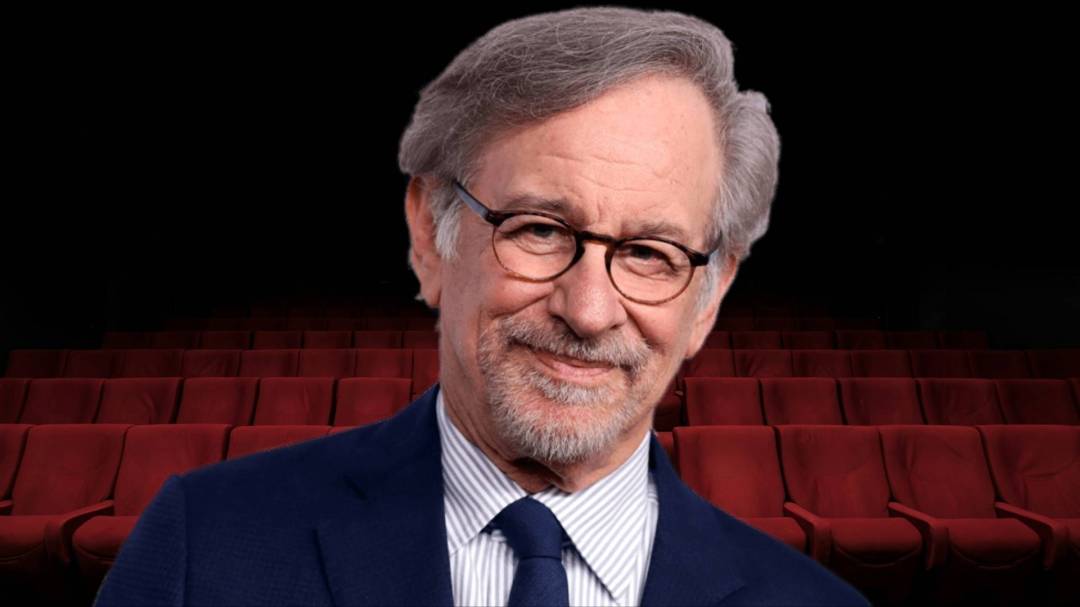
They say once you retire and stop moving, you die. That applies to a lot of professions—but when you’re Steven Spielberg, arguably one of the top three most influential filmmakers in the history of cinema, stopping isn’t even on the table. At 78 years old, Spielberg just had a state-of-the-art screening room named after him at Universal Studios and stood there, smiling, telling the world, “I will never retire from making movies.” And you believe him. Because how the hell could he?
This man has made over 40 films. And not just films—foundational works of art that helped define entire generations. If you’re a Xennial like me, born in 1982 and raised on VHS tapes, Spielberg didn’t just direct your childhood—he authored it. Jaws, Close Encounters, E.T., Indiana Jones, Jurassic Park, Hook, The Goonies (produced), Animaniacs (executive producer), Saving Private Ryan, Schindler’s List, The Color Purple—he moved across genres with ease, telling stories that resonated from age five to fifty-five. His filmography is basically a timeline of cultural touchstones.
Even his more recent films carry weight. I know not everyone loved Ready Player One, but I did. That movie took a book I adored and turned it into a visual experience that felt like a time capsule of the 1980s—but made for the now. And The Fabelmans? That was Spielberg pulling the curtain back on himself. A deeply personal, vulnerable film that showed us not just what made him great, but what made him human. And even that wasn’t a swan song. It was a pit stop.
Because now? Now he’s reportedly moving into the Western genre—one of the only major cinematic frontiers he hasn’t fully explored. And of course he is. The guy doesn’t know how to sit still. He’s the cinematic embodiment of “what’s next?”
And I say this selfishly, but I don’t ever want him to stop.
Not just because his movies shaped my childhood. Not just because he’s directed some of the most emotionally resonant, visually arresting films of all time. But because his presence—his refusal to slow down—is a kind of tether to everything that made me want to write, to create, to care about movies in the first place. Spielberg is a bridge. Between the old Hollywood and the new. Between classic storytelling and modern spectacle. Between what we were and what we might still be if we stop chasing trends and remember why stories matter in the first place.
There’s a reason names like Spielberg, Scorsese, and Coppola still get spoken with reverence. It’s not just nostalgia. It’s output. It’s endurance. It’s the simple, defiant act of still giving a damn. Of still putting skin in the game. Of still dreaming like you’re 25 even when your knees hurt and you’ve got nothing left to prove.
Spielberg isn’t coasting. He’s evolving. He’s teaching by doing. You think any studio exec in this IP-choked, AI-fueled landscape is going to stop him mid-project and say, “Hey Steven, can you make it more four-quadrant?” Please. He is the quadrant.
And yes, the younger generation hasn’t had the same run of instant classics. That’s fair. No one under 25 grew up with Spielberg in the same way we did. But that doesn’t mean he’s out of touch. It just means the baton hasn’t been passed yet. He’s still on the track, still running, and there’s still time to catch up and learn something.
Because when he does stop—when Spielberg finally calls it—it’s going to feel like a tectonic shift. Like something irreplaceable just blinked out of existence. That’s not just mourning a man. That’s mourning a standard. And right now, with studios chasing algorithms and AI-generated trailers and content that’s all noise, no soul—we need that standard. We need that North Star.
So yeah. Let him direct from a wheelchair at 99 with an AI voice box if that’s what it takes. Let him die behind a monitor shouting action on some sprawling set in the middle of nowhere. Let him tell stories until there’s no one left to listen.
Because as long as Spielberg is still making movies, there’s a part of Hollywood that still believes in magic.

 Hollywood After Dark