
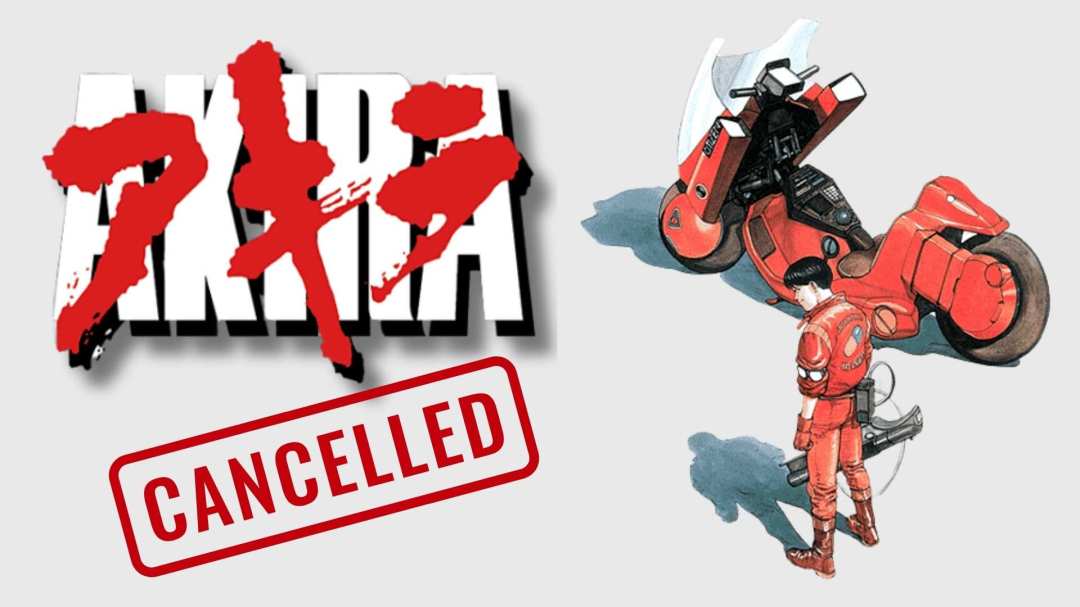
Somewhere out there in the multiverse, there’s a version of Akira that actually got made. Neon-soaked, chaos-infused, filled with psychic body horror and god-tier animation turned live action. Maybe Taika Waititi directed it. Maybe it wasn’t a disaster. But here, in this bleak dimension of studio exec indecision and content strategy PowerPoints, Akira is officially dead again. For real this time. Warner Bros. lost the rights. Taika’s version is toast. And the dream of a Western live-action adaptation has gone back to the weird nerd limbo where all great anime projects go to die—right next to that Cowboy Bebop reboot and the ghost of Ghost in the Shell.
Let’s be real: this thing was cursed from the start. Warner Bros. bought the rights in 2002. That’s the same year Attack of the Clones came out. Since then, they’ve cycled through more names than a Marvel post-credits scene. Stephen Norrington. Leonardo DiCaprio. The guy who did Orphan. Christopher Nolan even sniffed around it at one point. And for years, they kept dangling it like a carrot, whispering about “faithful adaptations” and “preserving the spirit of the original” while quietly doing absolutely nothing that resembled any of that. When Taika Waititi got attached in 2017, it actually felt like momentum—until Marvel devoured his schedule, and the wheels fell off somewhere between Thor: Love and Thunder and a failed Flash Gordon revival that didn’t make it past pre-pre-production.
Now here we are, June 2025, and the rights have officially reverted back to Kodansha, the Japanese publisher of the original manga. Translation: Warner Bros. ran out the clock, couldn’t lock down a production timeline, and fumbled it so hard it looped back to the source. And honestly? Good. They didn’t deserve it. This wasn’t just another IP to mine. This was Akira. The film that influenced everything from The Matrix to Chronicle to Stranger Things. A movie that still melts brains on rewatch, with hand-drawn animation that looks better in 4K than 90% of the CGI sludge studios are pumping out today.
What kills me is that Taika might’ve actually had something interesting to say with it—if he ever got the chance. Say what you will about Love and Thunder or Next Goal Wins, the guy knows how to balance absurdity with heartbreak. His pitch was reportedly to cast Asian leads, stick closer to the manga, and lean into the moral ambiguity at the core of the story. Which is wild considering half the industry still doesn’t know what the hell Akira is even about beyond “motorcycles and psychic puberty.” But the studio wanted a star. They wanted a date. They wanted a budget that could support six reshoots and a Burger King tie-in. So the project sat. And stalled. And eventually dissolved in a puddle of indecision and corporate fear.
And here’s the other thing they probably couldn’t crack: the ending. Let’s not pretend it’s easy. The climax of Akira is a mind-bending cosmic mutation where Tetsuo turns into a writhing mass of infinite flesh and energy before collapsing into a new universe. It’s beautiful. It’s iconic. And it’s completely incomprehensible to anyone not steeped in anime brainrot. From a mainstream perspective, it’s too much—too abstract, too weird, too “what the hell did I just watch?” What they could have done, and probably should have, is taken a page from Zack Snyder’s Watchmen. Strip the ending down to something more emotionally digestible, like a Doctor Manhattan-style transcendence. Still tragic, still epic, but not so alienating it makes general audiences shut down and check their phones. That route could have preserved the soul of the story without losing the plot—literally.
Now Kodansha is shopping the rights around, probably talking to Netflix, Apple, or Amazon—because of course they are. Streaming money is easier to spend when you’re not beholden to box office numbers or needing to make a billion just to break even. But will any of them have the guts to do it right? Will they go full Tokyo meltdown, psychic meatball climax and all? Or are we in for another glossy, bloodless adaptation that forgets why the source material hit so hard in the first place?
The truth is Akira was always a hard sell. It’s dense. It’s violent. It ends with a teenage god birthing a new universe in the wreckage of civilization. Not exactly four-quadrant material. But if someone did get it right? If someone actually understood that the story isn’t about motorcycles or explosions but about the fear of losing control—of your body, your country, your future—then we’d have something that mattered. Something that could rip through the noise of recycled franchise schlock and actually leave a crater.
Instead, we got nothing. Just another “what if” buried under two decades of creative turnover. Taika’s Akira will be remembered the same way we remember Guillermo del Toro’s Mountains of Madness or George Miller’s Justice League: as potential, not product. A folder full of concept art and canceled contracts. And maybe, just maybe, a warning to future studios that if you’re not willing to go all the way, don’t touch it at all.

 Hollywood After Dark