
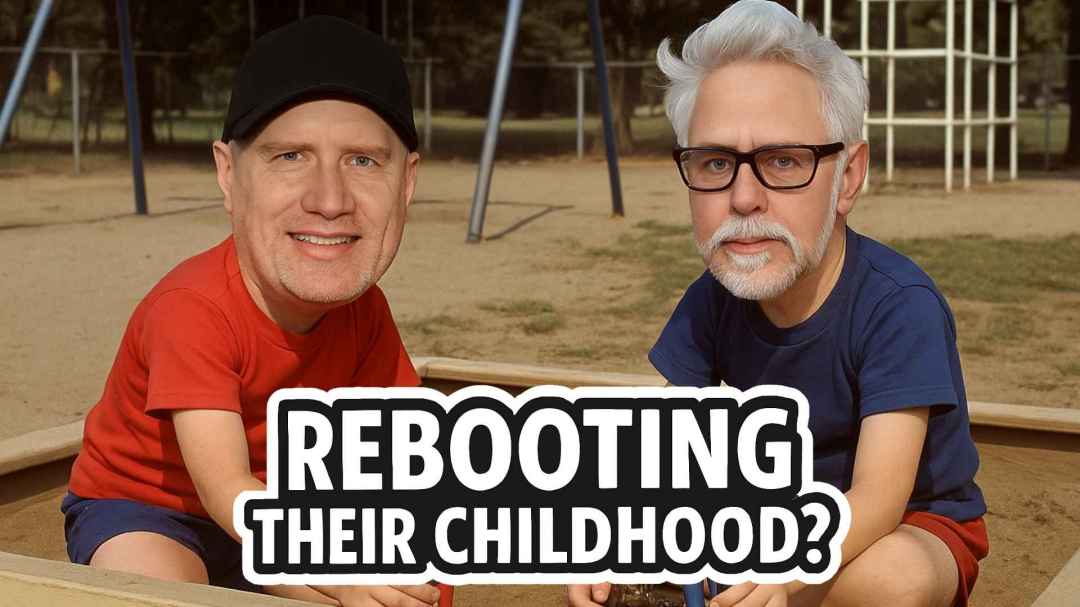
Something weird is happening with superheroes next month. Superman and Fantastic Four are both hitting theaters in July 2025, and they’re not just reboots. They’re love letters to the Silver Age of comics. You know the vibe: optimistic, space-age, full of retro-futurist nonsense and old-school morality. Basically the comic book equivalent of a box of Sugar Smacks. Flying robots. Science jargon. Probably a moon base. And look, I get it. These are classic characters. You want to honor the roots. But the timing? The execution? The whole aesthetic direction feels like two Gen-X showrunners staring down the barrel of mortality and deciding to regress to childhood, dragging the rest of us with them.
Kevin Feige is 52. James Gunn is 58. These aren’t kids playing with action figures in the sandbox anymore. They’re grown-ass men with billion-dollar studios, both using their biggest franchises to revisit stories that feel like comfort food from the 60s. Gunn’s Superman is loaded with big, goofy sci-fi Silver Age energy, right down to flying sidekicks and alien tech that looks like it belongs on a Lost in Space lunchbox. Feige’s Fantastic Four is straight-up set in the 1960s. Not inspired by it. Set in it. The costumes, the city skyline, the whole Cold War-via-Kirby package.
And I have questions.
Like… who is this for?
Because I’m not Gen X. I’m a Xennial. That weird Oregon Trail demographic that grew up with VHS and dial-up but hit adulthood with streaming and smartphones. I didn’t read comics during the Silver Age. I read the stuff inspired by it, the cartoons that took bits and pieces and made them digestible. So when I see a modern Superman flying around with Krypto the goddamn dog or Fantastic Four giving Sue Storm a baby in the first movie, it doesn’t hit me with nostalgia. It just feels like padding. Like the kind of thing Hollywood execs throw in to make a story “relatable” in the worst possible way. Oh, he has a pet. Oh, she has a child. See? They’re just like you.
No, they’re not. They’re superheroes. Stop making them sitcom parents.
The inclusion of kids and pets in these franchise-launching films feels less like character development and more like a studio checklist. Krypto, Baby Joey (Metamorpho’s kid), Reed and Sue’s infant. It’s all starting to feel like we’re speedrunning the sequels before we’ve even earned the emotional payoff. It’s like The Mummy Returns or The Legend of Zorro. Movies where the studio decided “hey, people liked the first one… now let’s give them a precocious kid who gets in trouble and says snarky one-liners.” But the difference is, those were sequels. This is round one. We haven’t even gotten to know these characters yet and they’re already saddled with dependents.
You can see the gears turning. This isn’t just storytelling. It’s marketing. The baby is for the moms. The dog is for the kids. The vintage setting is for the dads who still own vinyl. The problem is that it’s trying to hit everyone at once, and in doing so, it risks connecting with no one.
It’s not that Silver Age storytelling is inherently bad. There’s something genuinely refreshing about a superhero movie that isn’t drowning in irony or trauma. We’ve had a decade of grimdark, morally gray antiheroes brooding in rainstorms. If Gunn wants to bring back primary colors and big, weird sci-fi optimism, fine. That might actually be what this genre needs. And Fantastic Four being a 60s period piece? Sure, that could work. At least it gives the film a distinct identity instead of just slotting them into the same tired New York backdrop we’ve seen a hundred times.
But the tonal clash is real. These films are being crafted by men looking backward. The question is whether the audience is willing to follow them there. The average MCU viewer is in their early 30s. DC movies skew younger. Most of these people didn’t grow up idolizing the Silver Age. They were raised on X-Men: The Animated Series, Spider-Man 2, and Batman Begins. Their idea of Superman isn’t Christopher Reeve. It’s Henry Cavill gritting his teeth while drowning in existential guilt. Dropping Krypto into that landscape is like slapping a Hanna-Barbera sticker on a Tesla.
You can call it bold. You can call it nostalgic. But don’t pretend it’s not alienating.
What’s frustrating is that there’s a version of this that could work. One where the Silver Age style is the hook, but the story still builds character from the ground up instead of assuming we’re all emotionally invested just because we’ve seen the IP before. You want to make Superman hopeful? Do it. But make me care about him before you shove a dog in my face. You want to give Reed Richards a baby? Great. Maybe after we’ve spent one full movie watching him figure out how to be a person, not just a genius with stretch powers.
This isn’t about gatekeeping. It’s about storytelling. Nostalgia doesn’t mean anything if you’re not anchoring it to something real. And kids, pets, and time capsules don’t automatically equal heart. They’re just shortcuts. Lazy ones. The kind you use when you’re trying to fast-track emotional resonance without putting in the time to earn it.
So no, I’m not totally onboard with Silver Age worship. Not when it feels like cosplay for creators who just want to feel young again. Not when it’s served with a side of forced wholesomeness and “awww” moments. If Gunn and Feige want to build something new out of the old blueprints, they need to remember what made those original stories matter. Character, stakes, and sincerity. Not just vibes and vintage wallpaper.
Because otherwise, we’re not reviving the Silver Age. We’re embalming it.

 Hollywood After Dark