
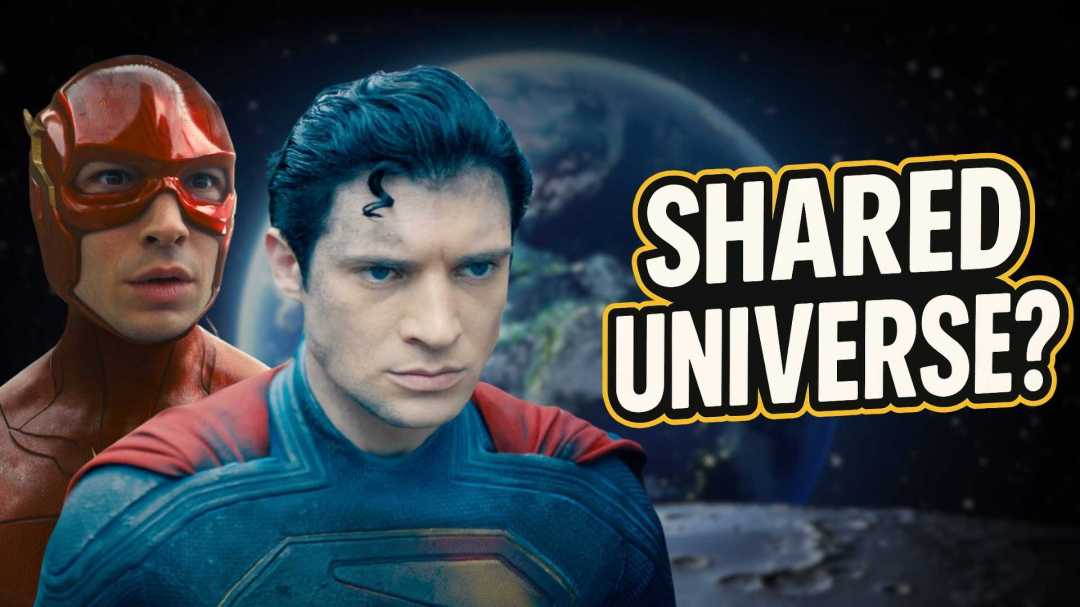
Here’s a theory that’s either complete nonsense or absolutely true: The Flash (2023) isn’t the end of the DCEU—it’s the beginning of James Gunn’s new DC Universe. And Superman (2025) might be the film that quietly confirms it.
Yeah, yeah, I know. The Flash was a box office mess, buried under controversy and CG baby nightmares. It looked like the final nail in the coffin for the Snyderverse and everything connected to it. But if you start paying attention—not just to the marketing, but to the visual choices, the recurring collaborators, and Gunn’s own very strategic vagueness—it starts to look less like a discarded relic and more like a foundational block.
Let’s go back to late 2022. James Gunn and Peter Safran take over DC Studios. Everything is in flux. The Snyder cult is still licking its wounds. WB is cleaning house. And four leftover DCEU films are about to stumble into theaters like wounded animals: Shazam: Fury of the Gods, The Flash, Blue Beetle, and Aquaman and the Lost Kingdom. But Gunn doesn’t treat them equally. Not even close.
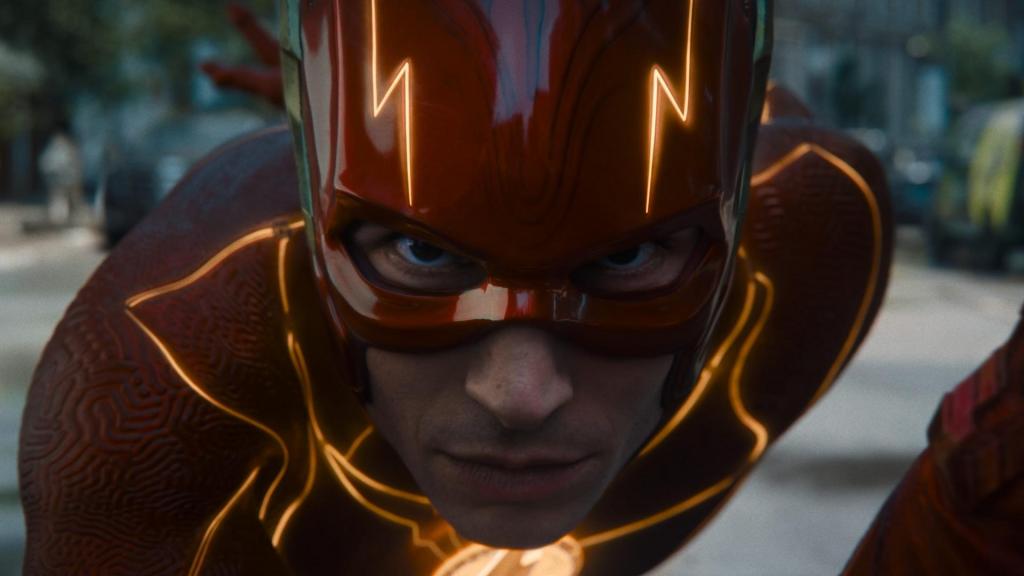
He barely mentions Shazam 2. Says almost nothing about Aquaman 2. Gives Blue Beetle a friendly shoutout, praising Xolo Maridueña and promising he’ll be back in the DCU (which sounds like “We’re keeping the actor, not the movie”). But The Flash? Gunn talks about The Flash like it cured his seasonal depression.
“One of the best superhero movies I’ve ever seen.”
“Andy Muschietti did an amazing job.”
“It’s fuckking amazing.”
He even said it was his favorite movie of 2023, over Guardians of the Galaxy Vol. 3, which he directed. That’s not studio-mandated PR fluff. That’s a message. A very loud, very pointed message. And if Gunn wanted to distance himself from the previous DC regime, he could’ve buried The Flash under a pile of polite indifference. Instead, he hyped it like it was the cornerstone of something new.
And maybe it was.
Because here’s where it gets really interesting: Superman (2025)—the movie that’s supposed to mark the official beginning of Gunn’s DCU—shares a lot of visual DNA with The Flash. Both films were shot by cinematographer Henry Braham, who’s also worked with Gunn on The Suicide Squad and Guardians Vol. 2 & 3. Braham’s style is distinctive: mobile, immersive, intimate. He uses lightweight RED cameras, wide-angle Leica lenses, and minimalist setups that let the camera float through scenes like it’s part of the conversation. It’s a style built for storytelling flexibility—and it shows up all over both movies.
Watch The Flash again (if you dare) and then watch the Superman teaser. The color, the lighting, the camera movement—there’s a shared rhythm there. It doesn’t look like Zack Snyder’s Justice League. It doesn’t look like The Batman. It looks like the next phase of the same visual language.
So if Gunn’s trying to establish a brand-new DCU, why does his Superman movie look like it was shot in the same timeline as The Flash? Because maybe… it was.
Let’s talk canon. Or more accurately, let’s talk Gunn’s idea of canon. Because it’s about as clear as mud—and that might be intentional.
He’s said that Creature Commandos is the official start of the DCU. That’s his clean line in the sand. But he’s also said that Peacemaker is “almost entirely consistent” with the new canon, except for that one time the Justice League showed up. As for The Suicide Squad, Gunn described it as “an imperfect memory.” Which is such a Gunn thing to say, but it’s also fascinating.
Imperfect memory. That’s not a hard no. That’s not a reboot. That’s multiverse-speak. That’s “it happened, just not quite the way you remember.” That’s the perfect cover for a character or film to be canon if and when Gunn wants them to be.
And what is The Flash, narratively speaking, if not the ultimate imperfect memory machine? The entire movie is built around time travel, multiverse resets, and causality spirals. The ending literally swaps out Bruce Wayne for George Clooney. You don’t get more “imperfect memory” than that.
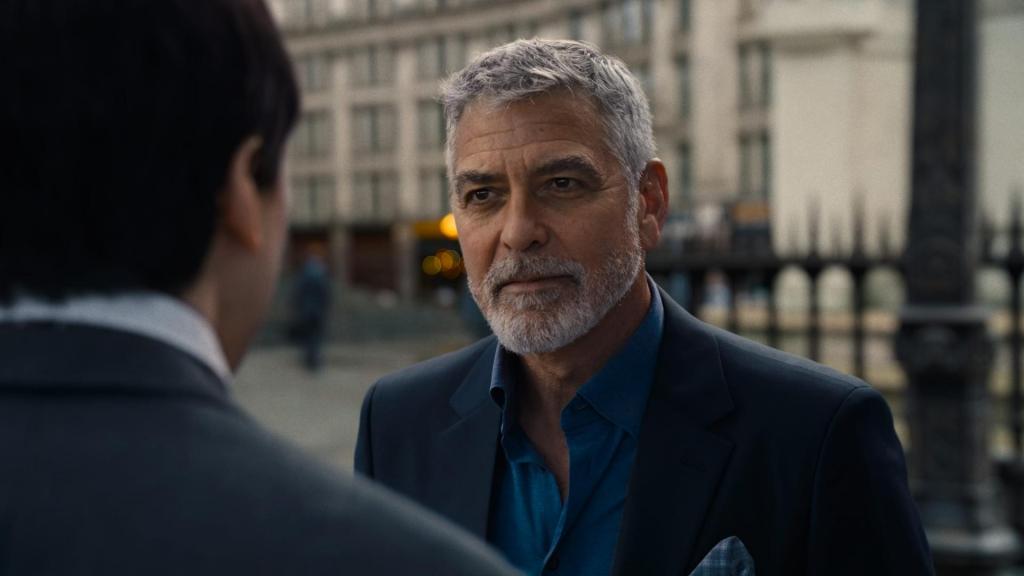
And guess who approved that cameo? James Gunn and Peter Safran. After watching an early cut of the movie, they suggested Clooney. They reached out to him. They brought him in. He shot the scene in one morning in January 2023. It wasn’t a leftover from the previous DC Films leadership. It was a Gunn play. A wink, sure—but also a test.
What if Clooney was never meant to stick around, but the idea was to show that the world can be changed that radically—and still function? What if that scene was a dry run for a larger idea: the timeline is malleable, the rules are soft, and canon is whatever makes the most sense for the story at the time?
If The Flash is treated like an imperfect memory—one that explains the aesthetic and tonal overlap between the old and new—then it suddenly fits. It’s not a clean break. It’s a bridge. A clunky, uneven bridge—but a bridge nonetheless. And Superman might be walking right across it.
So no, we’re probably not going to see Ezra Miller pop up in the Fortress of Solitude. But The Flash isn’t gone. It’s not erased. Gunn had every opportunity to toss it in the bin and walk away. Instead, he promoted it harder than anything else on DC’s 2023 slate. He brought back its director to helm The Brave and the Bold. He brought over its cinematographer for Superman. And he used it to showcase a universe that can rewrite itself on a whim.
If that doesn’t scream “canon,” I don’t know what does.
In the end, maybe The Flash didn’t bomb so hard it got forgotten. Maybe it just ran so fast, it ended up in a different universe. Gunn’s universe.
And if that’s the case, we’re all just living in an imperfect memory.

 Hollywood After Dark