
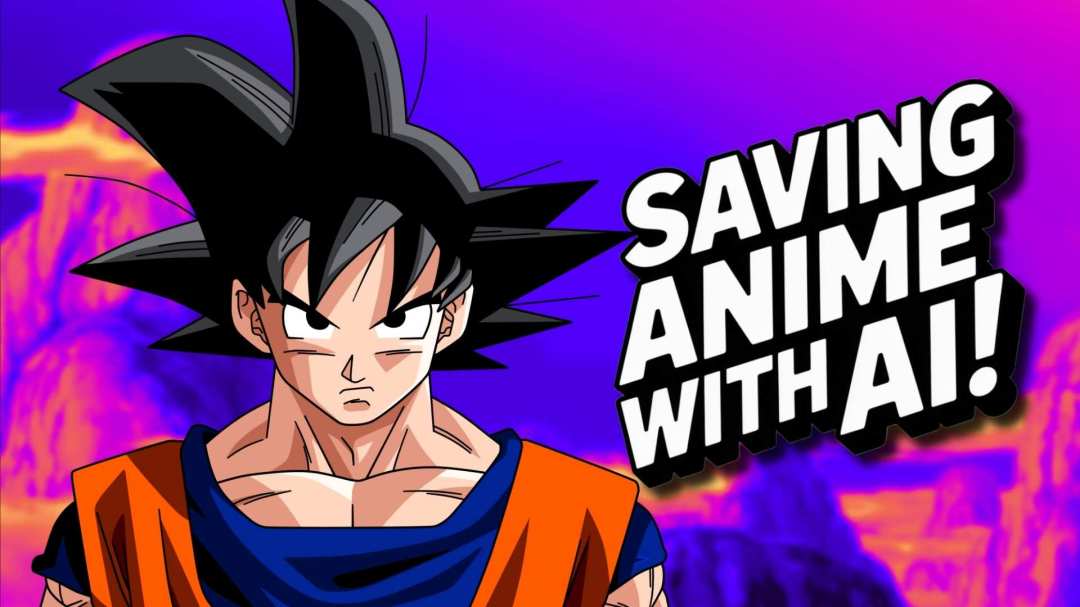
We’re watching another revolution in animation unfold right now, and if you blink, you might miss it. It’s not happening on a convention stage or in a sleek trailer. It’s happening behind the scenes, deep inside the production pipeline. And it’s being powered, increasingly, by artificial intelligence. Before you roll your eyes or start clutching your Blu-ray box sets like holy relics, hear me out: AI isn’t killing animation. It might just be saving it.
Take Toei Animation. Yes, that Toei. The studio behind Dragon Ball, One Piece, Sailor Moon. They recently announced plans to implement AI into nearly every stage of their workflow. We’re talking in-between frames, background generation, layout design, even line correction. That’s not just streamlining. That’s reengineering the whole machine. And to some people, that’s terrifying. Fans are already up in arms, calling it the end of artistry, the fall of tradition, the robot apocalypse in 24 frames per second. But those same fans aren’t asking the right question. They’re asking, “Will AI ruin the art?” when they should be asking, “What’s been ruining the artists?”
Because let’s be honest: the anime industry has been chewing up creatives and spitting them out for decades. Long hours, bottom-barrel pay, no job security, and the sheer volume of shows being pumped out like assembly line widgets. This isn’t a new problem. It’s just more visible now. And with anime’s explosive rise in global popularity, the pressure’s only gotten worse. Manga is outselling American comics by a 3-to-1 margin, and the hunger for new series is bottomless. But who’s paying the price? Not the fans binge-watching ten shows at once. It’s the junior animator pulling 14-hour days for less than what a barista makes.
That’s why Toei’s move is so fascinating. They’re not eliminating jobs. They’re trying to stop their workforce from collapsing. AI is stepping in to take care of the stuff that burns people out — the repetitive, thankless tasks that sap time and creativity. But somehow, when the conversation hits the timeline, it’s all about “protecting tradition.” What tradition? The one where talented artists quietly suffer while we pretend their labor is a magical gift from the anime gods? Come on.
This isn’t the first time the industry has panicked over innovation, either. Remember the reaction to CGI in the ’90s? When Jurassic Park hit, a lot of practical effects artists thought the sky was falling. There were real fears that computers would replace model-makers and puppeteers. And yeah, the industry changed — but it didn’t die. Those tools opened doors to new kinds of storytelling and new creative possibilities. AI is just the next evolution of that cycle.

And it’s not just Japan figuring this out. At TED 2025, ILM’s Rob Bredow dropped a short film called Star Wars: Field Guide. It was built using AI tools in under two weeks by one guy, Landis Fields. Not to replace a team, but to create a vibe — a concept piece. A living, breathing mood board that gave the creative team a playground to build from. Some of the creatures were a little too “giraffe-peacock” for my taste, but the point wasn’t perfection. It was possibility. Bredow made it clear: AI is a collaborator, not a conqueror. It’s about speeding up the boring parts so the artists can focus on the good stuff.
And let’s be clear: AI can’t do everything. It can’t replace instinct. It can’t feel tone or create subtext. It doesn’t understand cultural nuance or emotional rhythm. It’s not going to storyboard an emotional beat or animate a character with real soul unless a human tells it exactly how. What it can do is generate faster iterations, automate grunt work, and give artists more time to focus on their actual craft. That’s the tradeoff — and honestly, it’s a fair one.
This mindset is what’s going to reshape the industry. Not just for massive studios with legacy franchises, but for the weirdos, the visionaries, the indie creators stuck on the fringe. Just look at Flow, the Latvian animated feature made entirely in Blender over five years. No studio system. No Pixar polish. Just raw talent, open-source software, and a whole lot of heart. And it won Best Animated Feature at the 2025 Oscars. Beat Disney. Crushed the competition. Blender, by the way, is free. And as more AI tools become accessible within programs like Blender, you better believe we’re going to see more Flows coming out of the woodwork. Not despite AI, but because of it.
So here’s the thing: if you truly care about animation, you should care about the people making it. Not just their style. Their sustainability. You can’t claim to love the art and ignore the artist’s exhaustion. And maybe AI won’t fix everything overnight. But it’s a start. It’s a tool. And in the right hands, tools don’t destroy — they build.
The future of animation isn’t machine versus man. It’s machine with man. It’s human vision amplified, not erased. And if that means more stories get told by more people, in more places, with fewer bodies burning out in the process? Then I’m all in. Because animation has never just been about what’s on the screen. It’s about who gets to put it there.

 Hollywood After Dark