
Let’s talk about Henry Cavill.
The guy should be a massive movie star. He’s got the square jaw, the heroic posture, the kind of screen presence that makes you believe he could snap Zod’s neck with one hand and fix your internet with the other. But somehow, despite ticking every box in the “Hollywood leading man” checklist, Cavill’s career has been… weird. Stalled. Full of promise and passion, but never quite delivering the kind of consistent box office numbers that get studios foaming at the mouth.
So here’s the question: is Henry Cavill box office poison?

It’s not an accusation, it’s a genuine curiosity. Because lately, some studios seem to think he is. Lionsgate, for example, just quietly let Chad Stahelski’s long-gestating Highlander reboot—the one that Cavill was supposed to lead—walk right out the door to Amazon MGM. This, despite Stahelski’s John Wick franchise pulling in over a billion dollars for them. Stahelski wanted to reinvent Highlander the same way he reinvented Keanu. But the budget crept up to $180 million, and Lionsgate got cold feet. They looked at Cavill’s recent numbers and saw a third strike coming.
Well, it comes down to fear. Cold, hard, spreadsheet-based fear. Cavill’s last two big movies didn’t just underperform; they belly-flopped. The Ministry of Ungentlemanly Warfare, a Guy Ritchie film with Jerry Bruckheimer producing, cost $60 million and brought in less than half of that worldwide. Argylle, which came with Apple money and a $200M budget, only pulled $96 million globally. That’s not just disappointing—that’s “maybe we shouldn’t spend $180 million on a Highlander reboot with this guy” territory. And Lionsgate, a studio that’s already limping through a tough 2024, couldn’t justify the risk. So they let Amazon MGM take the wheel.
But here’s the thing: Highlander might not even be Cavill’s most important project. That title belongs to Warhammer 40,000.
Cavill is all in on Warhammer. This isn’t a paycheck gig or a vanity project. This is his holy grail. He’s a lifelong fan—a literal basement-dwelling miniatures painter who’s been talking about this universe for years. And now, thanks to a deal with Amazon and Games Workshop, he’s leading the charge to bring the Warhammer cinematic universe to life.
He’s not just starring in it—he’s executive producing. That means control. That means vision. That means this isn’t some cookie-cutter studio IP grab with Cavill’s face slapped on the poster. This is his thing. His baby. The way The Witcher could have been—before Netflix forgot that their breakout star was also the biggest fan in the room.
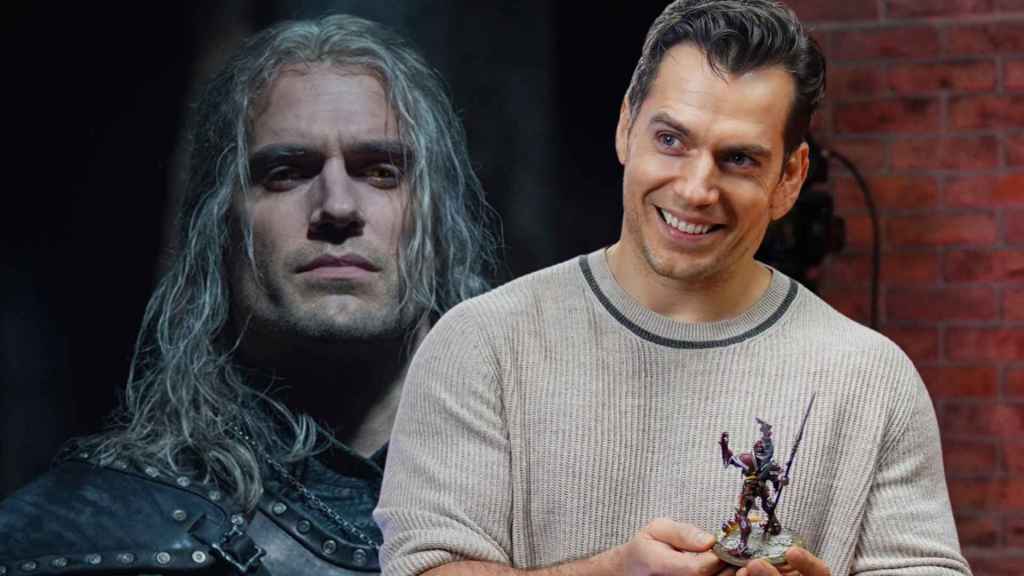
And Warhammer isn’t the only project on his streaming-friendly slate. Cavill is also set to appear in Amazon’s upcoming live-action Voltron movie—yes, that Voltron, the one cobbled together from various Japanese anime into a cult-favorite ‘80s cartoon. Directed by Rawson Marshall Thurber (Skyscraper, Red Notice) and featuring a cast that includes Sterling K. Brown, Rita Ora, and newcomer Daniel Quinn-Toye, the film is heading straight to Prime Video. No theaters. No box office stress. And that might be exactly where Cavill belongs right now.
Because let’s be honest: Cavill does great on streaming.
Enola Holmes was a hit. The Witcher was a global phenomenon—for at least two seasons. Cavill has consistently found success when he’s not shackled to the expectations of opening weekend box office numbers and four-quadrant appeal. Streaming gives him space. Room to breathe. Time to build. His characters resonate when viewers can binge, rewatch, and dive into the lore. And lore is where Cavill thrives.
He’s still got Enola Holmes 3 on the way. Highlander isn’t dead—it’s just moved to a studio with deeper pockets and more tolerance for niche genre swings. But if you’re looking at Henry Cavill’s career through the lens of what’s next, it’s Warhammer. It has to be.
What makes Warhammer so interesting is that it gives Cavill something he hasn’t had since Man of Steel: the chance to build something. Not just play a role—but create a world. That’s where Cavill shines. Say what you want about Man of Steel or Batman v Superman (and the internet certainly has), but Cavill got Superman. He understood the mythic weight of the character. He gave it dignity, tragedy, and gravitas. Even when the scripts let him down, he never phoned it in.
Same with The Witcher. For all the behind-the-scenes drama, you could tell that Cavill loved Geralt. He carried that show on his monster-hunting shoulders through two and a half seasons of often-questionable writing. And when he left, it wasn’t ego—it was frustration. He wanted to protect the source material. The lore. The thing that made him fall in love with the world in the first place.
Warhammer gives him that opportunity, but without the baggage. He’s not being told what to do by a studio that doesn’t get the fandom. He is the fandom. And if this thing lands—if Amazon gives it the push it needs, if they market it smartly to both hardcore Warhammer fans and the wider “dad TV” audience that made Reacher a hit—Cavill might just pull off one of the greatest career pivots in modern Hollywood.
Of course, the label “box office poison” doesn’t go away overnight. It lingers. It’s the kind of thing that gets whispered in development meetings and slapped onto risk assessments. But that label is lazy. It’s reductive. It’s the product of an industry that doesn’t know what to do with an actor who actually cares—someone who doesn’t chase clout but instead nerds out over tabletop strategy games and sword choreography.
And here’s the truth: Cavill’s failures weren’t his failures. Argylle had a confused marketing campaign and a plot that felt like someone fed an AI every spy movie from the past 20 years. Ministry of Ungentlemanly Warfare was dumped into theaters with barely any fanfare. These weren’t star vehicles—they were studio misfires.
But with Warhammer, Cavill finally gets to drive. And maybe that’s what he’s needed all along. Not to be someone else’s star, but to be the architect of his own universe.
So no—I don’t think Henry Cavill is box office poison. I think he’s one great project away from proving everyone wrong. And if it’s a bunch of grimdark space marines, a sword-wielding immortal, and a giant robot lion mech that gets him there?
Even better.

 Hollywood After Dark