

John Rambo wasn’t supposed to be a superhero. He wasn’t supposed to be a cartoon or a Funko Pop or an icon of right-wing power fantasy. He was supposed to be a tragedy.
When First Blood dropped in 1982, it wasn’t some meathead shoot-’em-up. It was a bruised, bitter little film about a man America chewed up and spit out. A former Green Beret, left drifting in the wake of a war the country wanted to forget, and haunted by memories it never let him process. The cops in that movie weren’t just antagonists—they were stand-ins for a society that treated Vietnam veterans like they were radioactive. Dangerous. Disposable. John Rambo was a shell of a man with a survival knife and a bad case of what they used to call “battle fatigue.” Today, we’d say PTSD. Back then, they called it being a time bomb.
But somewhere along the way, the time bomb became a brand.
Three years later, First Blood Part II kicked in the cinematic door with explosive arrows, a bandana, and a body count. It made over $300 million worldwide, turned Rambo into a Cold War action figure, and helped redefine American masculinity on the big screen. And with that, the soul of the original film got sucked out and replaced with muscles, machine guns, and jingoism. Lots of jingoism.
It got even more surreal in Rambo III, where he literally teams up with the Mujahideen to fight the Soviets in Afghanistan—footage they don’t exactly dust off for the History Channel anymore. Then came the 2008 revival, a grim, gory return to form (at least tonally, and it was excellent), and 2019’s Last Blood, which felt like a confused attempt to cross Home Alone with Sicario, minus the nuance.
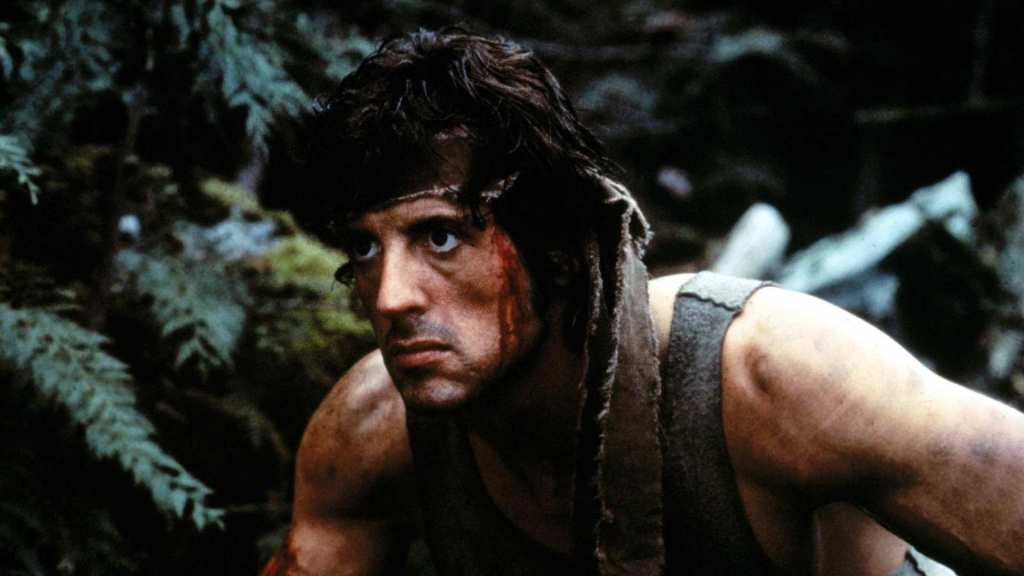
And now here we are: John Rambo. A prequel nobody asked for, from a studio that doesn’t seem to understand—or care—what made the original special. Millennium Media, who’ve held the rights since 2005, are trying to milk this IP for whatever’s left in the tank. And the plan, apparently, is to turn Rambo into an origin story action spectacle, set in Vietnam, with a young actor playing a pre-First Blood John Rambo. Never mind that we already know what happened to him there. Never mind that the whole point of the original story was about the after.
This isn’t about storytelling. This is about franchising. This is IP necromancy.
The whole thing reeks of that modern Hollywood desperation to spin every character into a cinematic universe. But Rambo doesn’t need a universe. He was the universe—a self-contained scream into the void about what happens when a country trains its soldiers to kill and then forgets them when they come home. The idea that you can slap a Marvel origin treatment onto a character like Rambo and pretend it’s respectful is laughable.
And it gets worse when you look at who’s been playing around with the character lately. Take the Rambo: First Kill graphic novel, launched on Indiegogo and co-written by Chuck Dixon and Will Jordan, a.k.a. The Critical Drinker. Dixon’s a conservative comic book vet; Jordan’s a YouTube culture warrior who’s made a brand out of yelling at clouds (and women in Star Wars). Sylvester Stallone even co-wrote it. That’s right—the man who was Rambo helped pen a version of his own origin that feels more like fan service for grievance junkies than anything with emotional weight.
There’s a reason none of this has been mentioned in Millennium’s press for Rambo: Origins. They want the IP, but not the baggage. They want the myth, not the message.
And maybe that’s why this whole thing stings. It’s not just about a bad idea for a movie—it’s about erasing the parts of cinema that used to challenge us. First Blood didn’t glorify war. It didn’t treat veterans like action figures. It was a critique. It made you uncomfortable. And it did it at a time when no one wanted to talk about Vietnam, let alone feel sympathy for the men we left behind.
This year marks the 50th anniversary of the end of that war. April 30, 1975—the Fall of Saigon. A perfect time to reflect, to reconsider, to maybe tell a real story about trauma and disillusionment. But no. Hollywood’s answer is a glossy, retooled prequel where Rambo probably gets his knife from a wise old colonel and delivers quippy one-liners while mowing down CGI enemies in slow motion. Probably set to a synth score. Probably test-screened into oblivion.
Because God forbid a movie make you feel something uncomfortable anymore.
If you strip away the spectacle and nostalgia, Rambo isn’t a hero. He’s a man broken by a system that never cared about him. A man who begged not to be pushed. Who fell apart on the floor of a police station, crying for a friend who died in a nameless war. That’s not a franchise. That’s a warning.
So no, John Rambo isn’t just a bad idea. It’s a betrayal. A betrayal of the character. Of the story. Of the history.
And for what? Another IP to feed into the streaming void. Another movie to reboot five years later when the prequel flops and some exec decides the real money was in a gritty reboot all along.
But John Rambo deserved better than to become a mascot for macho nonsense. He deserved to be remembered the way he was introduced: bleeding, hunted, and alone—not because he was a monster, but because nobody cared enough to ask what made him that way.

 Hollywood After Dark