

Let’s get something straight: if you co-created Pornhub and then pivoted into running a sprawling SEO-driven content empire where writers are allegedly blacklisted for asking for better pay, you don’t really get to play the victim when someone reports on it. And yet, here we are—Valnet Inc. is suing The Wrap for $64.5 million over what they claim is a defamatory article. The Wrap, for its part, says it’s a well-sourced piece of investigative journalism—and, in my opinion, that article pulled back the curtain on a media company that’s gotten very comfortable operating in the shadows.
The Wrap’s report dropped on March 20 and was written by Umberto Gonzalez. It painted a harsh picture of Valnet’s business model and CEO Hassan Youssef’s career path, including alleged exploitative labor practices and a history in adult entertainment. According to the piece, Valnet’s portfolio—Screen Rant, Collider, CBR, and MovieWeb—functions more like a digital sweatshop than a traditional newsroom. Freelancers, the article claims, were getting paid as little as $15 an article, were blacklisted for speaking out, and one even filed a lawsuit that could become a class action if successful.
Valnet’s response? On April 25, they filed a lawsuit in federal court claiming defamation, unfair competition, and “tremendous emotional distress” for Youssef himself. According to the suit, the article was “inflammatory” and “false,” and has damaged both Valnet and its CEO’s reputations, causing financial harm. They also claim The Wrap used copyrighted promotional material without permission.
Which is kind of hilarious—because just days earlier, Valnet won a major legal victory when the U.S. Supreme Court declined to hear a copyright case (McGucken v. Valnet) accusing them of embedding copyrighted material without permission. The irony is so thick it should come with a surgeon general’s warning. Valnet won that case by arguing that embedded content doesn’t count as infringement… and now they’re suing someone else for allegedly using their photos? That’s a level of irony not meant for mortal men.
To cap it off, The Wrap later updated their article to include this absolutely scathing response from their counsel, Robert Chapman:
“Valnet Inc. and Hassan Youseff have now filed two inconsistent, contradictory and meritless lawsuits,” he stated. “In one lawsuit, they claim they were harmed because TheWrap told the truth about them. In the other lawsuit, based upon the identical article, they claim they were harmed because TheWrap did NOT tell the truth about them. In one lawsuit they sued the reporter, Umberto Gonzalez, claiming he caused harm, and in the other lawsuit Mr. Gonzalez is not named as a defendant at all. Fortunately, there are judges and juries who will sort out these blatant inconsistencies and reject these claims.”
It’s hard to read that and not think this lawsuit was launched more to punish than to protect.
And here’s where it gets even messier: The Wrap didn’t publish their report on the lawsuit until April 30—five days after Valnet filed. So it’s not just aggressive, it’s preemptive. Sue first, spin later.
The allegations in the original article, meanwhile, have been echoed across social media. Jake Kleinman tweeted about interviewing for a full-time job at Screen Rant, only to be told that a key part of the role would be “pushing back against freelance rate inflation.” Max Marriner shared that he was paid $15 an article—after spending 20–30 hours on each one. That’s not just underpaid—that’s exploitative, in my opinion. Another writer said she was ghosted by Valnet and had to post publicly on LinkedIn just to get paid.
And while all of that was happening? Collider, one of Valnet’s crown jewels, was busy dropping feel-good internal features highlighting staffers’ proudest moments and celebrity Q&A milestones. No mention of the blacklist. No mention of the lawsuit. Just high-gloss vibes and curated success stories. It’s PR sugar meant to coat a very bitter pill.
This issue extends far beyond movie news. Luke Plunkett wrote last year about the declining state of freelance games journalism—specifically calling out how big-name outlets (some owned by Valnet) are leaning harder than ever on underpaid, overworked freelancers. His reporting laid out a bleak landscape: minimal pay, no benefits, and the constant threat of being replaced for demanding anything more.
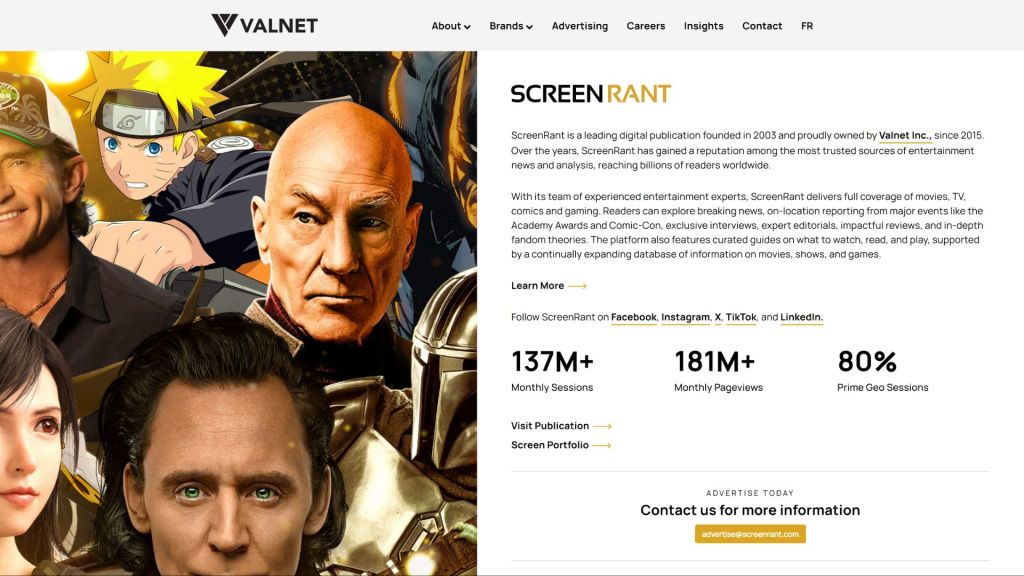
And again, Valnet’s not hurting for money. The company claims Screen Rant alone gets 137 million monthly clicks. Across their network? 260 million page views a month. This is not some indie startup being bullied by big bad media. This is a media giant with deep pockets and a long reach trying to silence critique through litigation.
To be clear, Valnet and Hassan Youssef have every right to defend themselves. If there are factual inaccuracies, the courts can weigh them. But trying to shut down an investigative piece, demanding it be unpublished, and chasing punitive damages for emotional distress? That doesn’t look like a search for justice. It looks like a warning shot.
Personally, I find it hard to feel much sympathy for someone who, according to reports and court filings, made millions off adult websites before rebranding as a digital media mogul. If that past didn’t keep him awake at night, I have a hard time believing a piece of journalism did. Again—just my opinion.
This lawsuit looks less like damage control and more like control, period. And if it succeeds, it sets a troubling precedent: don’t like what a reporter says? Lawyer up and make it hurt.
In my view, The Wrap did what journalists are supposed to do—shine a light. And if that light burns a little? Maybe that’s the point.

 Hollywood After Dark