
The Oscars have never been about the audience. They’ve been about the mirror Hollywood holds up to itself — sometimes to admire, sometimes to scold. The myth is that the Academy celebrates the “best” in film. The reality? It rewards what the industry wants to be seen rewarding. Prestige. Messaging. A sense of legacy. It’s less a ceremony than it is an annual public therapy session where the movie industry simultaneously congratulates and critiques itself, and then hands out gold statues to prove it’s all been meaningful.
So it says something that, for once, the Academy is getting ahead of something. Not reacting, not retreating, but actually responding to where the future is headed. And that something is generative AI.
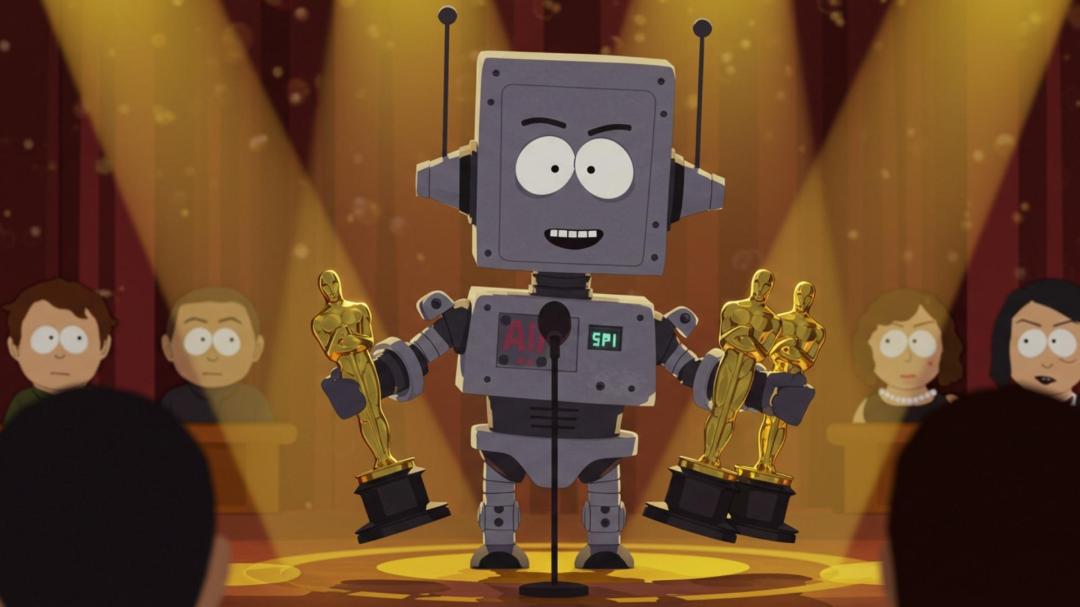
Last week, the Oscars updated their rules to officially allow films made using generative AI to be eligible — with one big caveat: the human creative authorship must still be clear and primary. In other words, AI can be part of the process, but it can’t be the process. The film can use machine learning for visuals, voices, even plot generation — but it still needs to come from a human storyteller. It’s a small rule change with massive implications. For once, the Academy isn’t just clutching pearls about “robots taking over cinema.” They’re saying, “Alright. Let’s talk about what this actually means.”
And that’s huge. Because make no mistake — AI is coming for every part of this industry. It already is. From real-time visual effects to automated rotoscoping, background replacement, dialogue cleanup, even previsualization and pitch decks — the tools are getting better, faster, cheaper. It’s not even hypothetical anymore. It’s happening. What the Academy’s done here is quietly signal: we know. And we’re not going to run from it.
Which, frankly, is a nice change of pace. Because historically, the Oscars have always been late to the party — if they show up at all. Remember 2018? That was the year the Academy tried to introduce a “Most Popular Film” category, a transparent attempt to appease the blockbuster crowd and boost ratings. Everyone could see it was created to give Black Panther a statue without putting it in the same room as Roma or The Favourite. It backfired instantly. The backlash was so strong they killed the category before they even defined it, and then nominated Black Panther for Best Picture anyway as if to say, “See? We’re cool.”
It was a mess. A clumsy, desperate attempt to be relevant without understanding what relevance even looks like anymore.
That’s been the Oscars’ struggle for years. They want to evolve, but they also want to preserve their imagined nobility. They want to be “of the people” without inviting the people to the table. And the result is often performative, hollow gestures — like that time they tried to cut editing and cinematography from the live broadcast to speed things up. Because, apparently, honoring the crafts that make movies movies was too time-consuming for an awards show about movies.
So yeah, my relationship with the Academy has been rocky for a while. Maybe it started in 2000, when Tarzan won Best Original Song over Blame Canada. No offense to Phil Collins — the man is a legend — but Trey Parker and Matt Stone wrote a musical satire so biting, so sharp, so memorable, that it’s still quoted today. People still sing those songs. No one’s humming Tarzan’s closing credits at karaoke night. But Collins was safe. Parker and Stone weren’t. And that’s the Oscars in a nutshell.
Which is why this AI decision matters. Because it’s not safe. It’s not sanitized. It’s the first move in years that feels like it’s facing forward instead of backward. And yeah, it comes with caveats. The Academy still wants to draw a line between enhancement and authorship, between innovation and imitation. But they’re no longer pretending the technology doesn’t exist. They’re not waiting until some AI-generated film wins a festival award to start asking questions. They’re starting now.
And if you’re one of those people panicking about what this means, here’s the reality check: AI isn’t going to replace good storytelling. It’s not going to erase the human touch from movies. What it will do is shift who has access to high-quality tools. It will allow small teams, independent artists, and storytellers without industry connections to build worlds that would’ve once cost millions. It democratizes scale. That’s not the death of cinema — that’s a rebirth.
What matters — what’s always mattered — is the intent. The voice. The creative soul behind the machine. And if the Oscars are finally willing to recognize that? Maybe, just maybe, they’re ready to start rewarding art for what it could become, not just what it used to be.
Because the future of film isn’t coming. It’s already rolling credits. And for once, the Academy didn’t miss the cue.

 Hollywood After Dark