
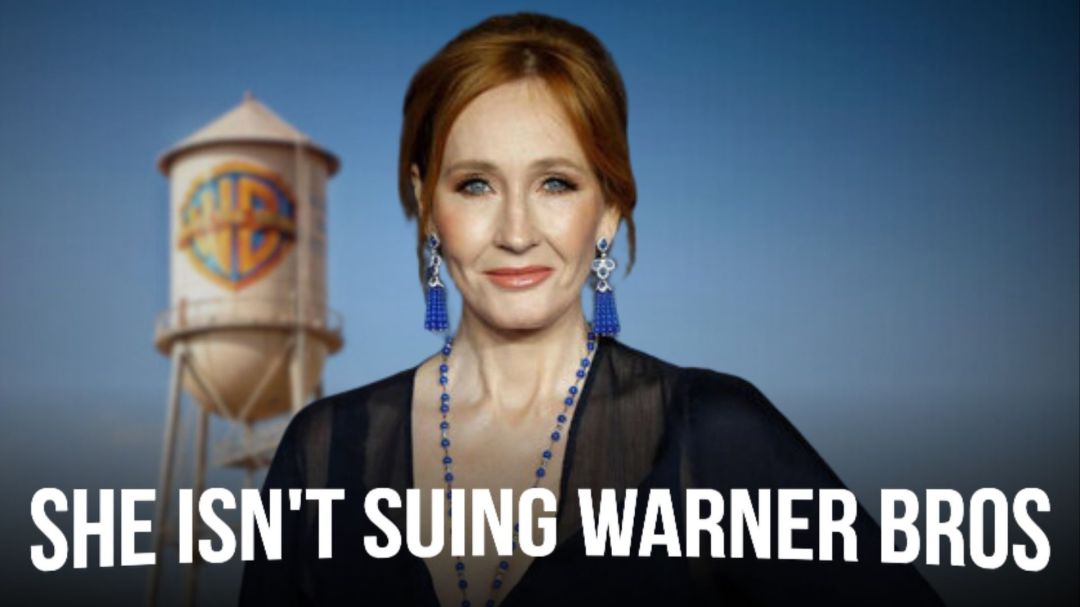
There’s a rumor flying around right now that J.K. Rowling is suing Warner Bros. because she’s upset over the casting of the new Harry Potter TV series—specifically over the decision to cast Paapa Essiedu, a Black British actor, as Severus Snape. Supposedly, she’s demanding full creative control back, end of story. And in typical internet fashion, a lot of people didn’t even wait for facts before they jumped straight into the outrage cycle, building entire narratives on what amounts to a Facebook post, a few Reddit threads, and absolutely zero verified sources.
At first glance, it fits the storyline everyone loves to run with about Rowling these days. She’s controversial. She’s outspoken. She’s publicly tangled herself in debates around gender identity, and in the process, she’s become a cultural lightning rod. And sure, it’s easy to imagine her getting mad about a casting choice and throwing down legal threats. But if you actually stop and look at the details for longer than two seconds, this story doesn’t add up.
For starters, J.K. Rowling is the same person who supported casting Noma Dumezweni, a Black actress, as Hermione Granger in Harry Potter and the Cursed Child. She defended that decision publicly and repeatedly, pointing out that Hermione’s defining traits were her intelligence and fierce loyalty, not the color of her skin. Rowling caught a fair amount of grief for that choice at the time, but she never backed down. So the idea that she would suddenly turn around and wage a lawsuit over another diverse casting choice feels…off. If anything, it feels like the internet trying to staple two different controversies together to manufacture a third one.
And that’s really what we’re dealing with here: the internet’s favorite pastime. Manufacturing outrage. We’re not even trying to verify things anymore—we just want the rush of being angry about something. It’s the same reason a completely fake story about Steph Curry creating “Respect Everyone Everywhere Day” after his mom was supposedly kicked out of a Ferrari dealership caught fire online. It sounded good. It fit the vibe. So people believed it. Never mind that it wasn’t true. Never mind that Curry never said anything about it. Never mind that no Ferrari dealership was named, no police report was filed, and no actual news outlet touched the story with a ten-foot pole. The truth didn’t matter. The feeling did.
It’s the same thing with The Goonies 2. First, an AI-generated poster drops online claiming a sequel is happening, and everybody rolls their eyes at how desperate the internet is for nostalgia bait. Then, a few months later, Warner Bros. actually greenlights a Goonies sequel for real, and suddenly people feel vindicated, like believing in fake news was somehow the right call because reality eventually bent to their wishful thinking. It’s madness.
But nowhere is it more obvious—or more exhausting—than with J.K. Rowling. She has become the internet’s favorite punching bag, a symbol for everything from outdated feminism to outright bigotry, depending on who you ask. Which means people are more than willing to believe the worst about her without hesitation. Someone posts a viral story claiming Rowling personally told the employees at Universal Studios’ Harry Potter World they weren’t allowed to drink water in 100-degree heat because it would “break immersion,” and thousands of people just…believe it. No fact-checking. No questioning. Just pure, righteous indignation on tap.
And sure, you can argue that Rowling has put herself in this position. She’s not exactly careful with her words. She’s picked fights that most public figures would run from. She’s tweeted through scandals when lying low might have been the smarter move. But here’s the thing: being controversial isn’t the same as being guilty of every wild rumor someone dreams up about you. Even when it’s easy. Even when it feels good.
There’s a deeper, uglier problem here that goes way beyond Rowling. The internet is broken. Completely. We’re so desperate for stories that confirm our biases that we’ll accept total fiction without blinking. We’re not interested in the truth anymore—we’re interested in the performance of being “right.” And it doesn’t just hurt people like Rowling. It hurts everyone. Because once you normalize outrage without evidence, it becomes impossible to trust anything at all.
Who’s fact-checking the fact-checkers? Who’s putting the brakes on viral fiction before it becomes tomorrow’s accepted reality? Spoiler alert: almost nobody. Facebook, TikTok, Twitter, Reddit—they’re all designed to reward speed, emotion, and confirmation bias, not accuracy. Once a juicy headline gets rolling, good luck stopping it.
So yeah, J.K. Rowling is controversial. She’s messy. She’s polarizing. But she’s also not suing Warner Bros. for casting a Black Snape. Not today, anyway. And if tomorrow she did? Maybe then we could talk about it. But until then, maybe—just maybe—we should stop treating Facebook posts like gospel, and start asking harder questions about why we’re so eager to believe them in the first place

 Hollywood After Dark