

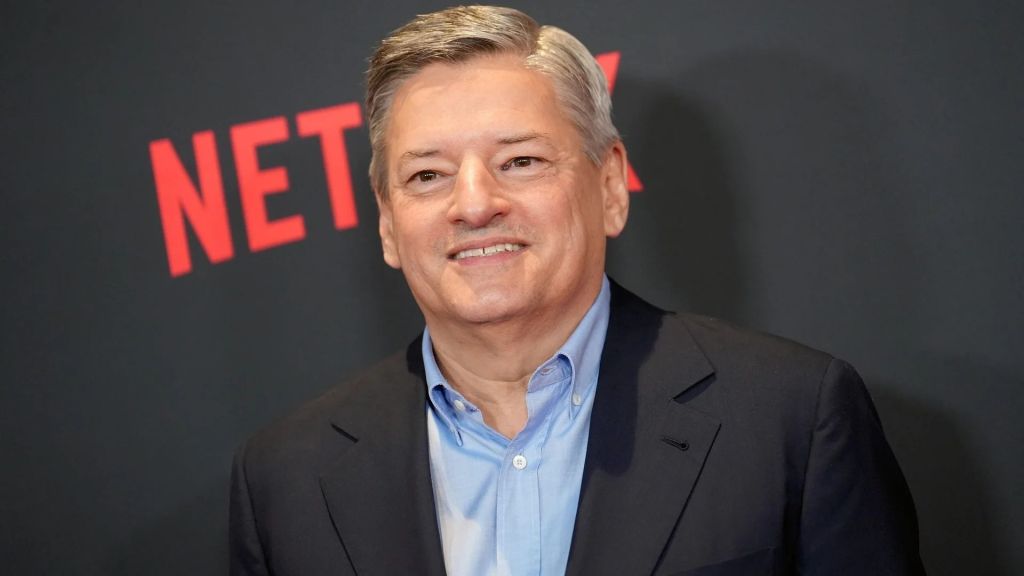
There’s this ongoing argument right now between people like Netflix’s Ted Sarandos and the diehard defenders of movie theaters. Sarandos went up on stage at the TIME100 Summit and basically said what he’s been hinting at for years: movie theaters are an outmoded idea. Not dead exactly, but fading. People would rather just stay home, fire up Netflix, and watch a movie on the couch with their dog and a DoorDash order. And honestly? He’s not wrong. But also? He’s not entirely right either.
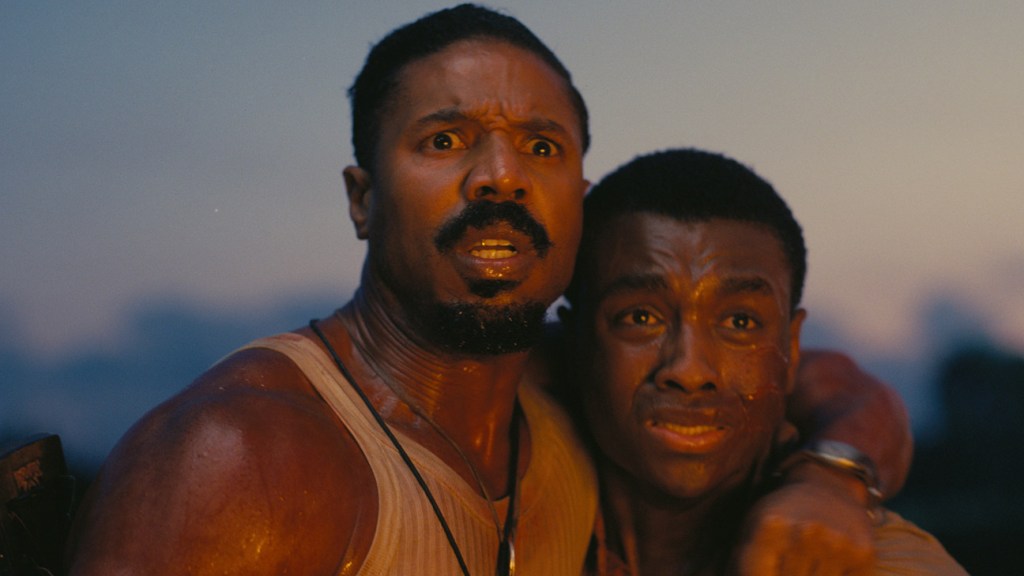
Because this weekend, Sinners proved something that’s easy to forget: when the right movie hits at the right time, theaters still matter.
Ryan Coogler’s new horror movie didn’t just survive—it thrived. After opening strong last weekend with nearly $50 million, Sinners barely dropped heading into its second weekend, pulling audiences back into theaters at a time when most original movies would’ve already flamed out. That kind of staying power is rare these days. Especially for something that isn’t built on pre-existing IP. Something about Sinners—maybe the buzz, maybe the cast, maybe just the sheer audacity of it—hit people squarely in the chest. And they showed up for it.
But here’s the important part: almost half the audience didn’t just see Sinners in a regular theater. They shelled out for IMAX, Cinemark XD, Dolby, all the premium formats. Forty-five percent of the box office came from these pricier tickets, with IMAX alone accounting for 20% of sales. When your average IMAX ticket runs $20–$25 (sometimes more), that adds up fast. It’s great news for theaters—but it also sends a very specific message.
People are still willing to leave their houses for a movie. But increasingly, it has to feel special.
And theaters know it. AMC, Regal, and Cinemark are investing a combined $2 billion into upgrading their auditoriums. Bigger screens, better chairs, fancier food. They’re not just fighting streaming—they’re trying to reframe moviegoing as a luxury event. The problem is, not every movie can support that model. If it’s not a spectacle, if it’s not a viral hit, if it’s not worth a $25 ticket and a babysitter, is it even going to get a real shot anymore?
That’s the uncomfortable future nobody wants to talk about yet.
Part of why April felt so lively at the box office is because the calendar played nice. Spring break rolled across different regions for most of the month, and families rushed out to see Minecraft early on. That movie landed exactly where it needed to, with kids dragging parents along, and memes like the infamous chicken jockey—a zombie baby riding a chicken—flooding social media. Seriously, Minecraft probably owes half its gross to TikTok.
Adults were a little slower to find something to rally behind, but once the word spread, Sinners became that movie. Positive reviews, viral social media moments, and a few hilarious, jaw-dropping scenes (Haley Steinfeld’s dialogue, in particular) gave it a second wind most films would kill for. If you’ve seen even a bootleg clip floating around Twitter, you know what I’m talking about.
But the real test starts now.
Because next weekend, Thunderbolts hits theaters, kicking off the summer movie season for real. And after that, it’s a wall-to-wall pileup: Mission: Impossible, Jurassic World, Fantastic Four, Superman. Big brands, big budgets, big expectations.
And here’s where things get interesting. Early tracking shows Superman is sitting right behind Jurassic World in unaided awareness. That’s good. But it’s also a little precarious. Because while the marketing is trying to show audiences that this is a fresh start—a new Superman, a new DC universe—the average moviegoer still isn’t entirely sure. If that confusion lingers too long, it could hurt. We’re in that weird zone where curiosity needs to turn into urgency, and fast.
The truth is, Ted Sarandos knows exactly what he’s talking about when it comes to casual viewing habits. Netflix owns your Tuesday night. But even Ted can’t replicate the magic of a Saturday night in a packed theater. The laughter, the screams, the sheer electricity when something wild happens onscreen. Whether it’s a vampire showdown in Sinners or a chicken jockey gag in Minecraft, the communal thrill of it all still hits harder in a dark room with a bunch of strangers.
Cinema isn’t dead.
It’s just evolving into something sharper, rarer, and yes—more expensive.
The question now isn’t whether theaters will survive.
It’s whether the movies coming up will be good enough to make us need them to.

 Hollywood After Dark