
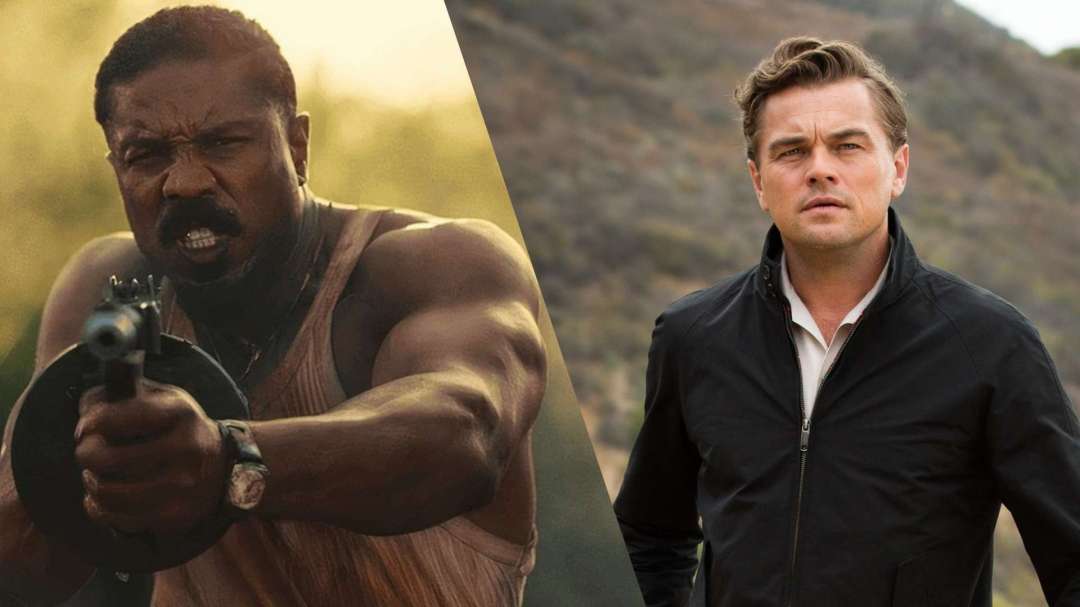
There’s this weird obsession online right now with dragging The New York Times over its coverage of Sinners—Ryan Coogler’s Southern Gothic horror epic that just opened at number one with a $48 million domestic haul. People are pissed that the Times called it a “box office success (with a big asterisk)” and then launched into a full paragraph about how it’s a long road to profitability. And to be fair, on its face, that criticism makes sense. This is one of the best openings for an original, non-franchise, non-IP movie in years. And the internet wasted no time pulling receipts, pointing out that in 2019, Quentin Tarantino’s Once Upon a Time in Hollywood opened smaller, landed in second place behind The Lion King, and was still heralded as a triumph.
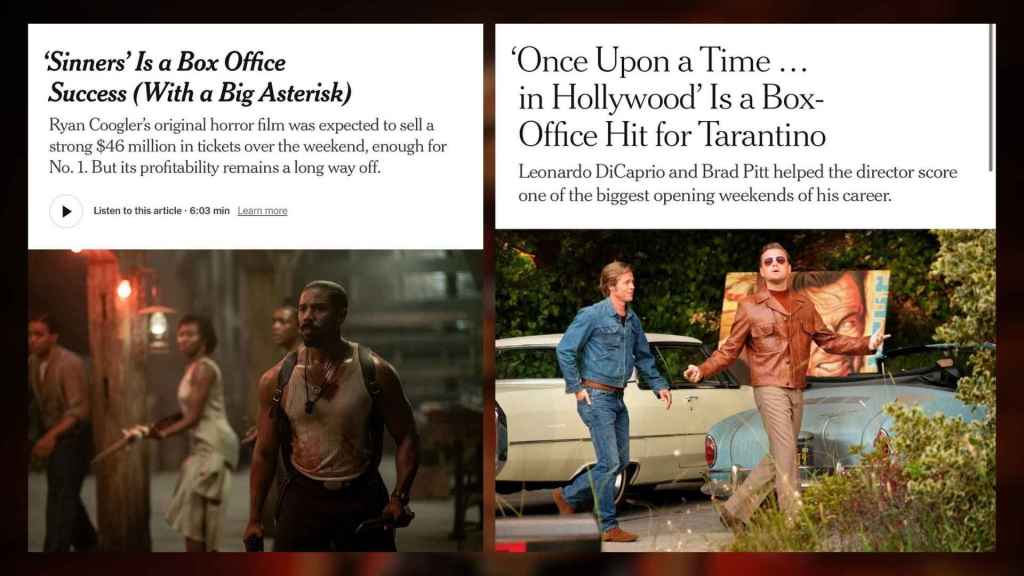
But here’s where it gets complicated: we are not in 2019 anymore. That was a different time, a different industry, and a different set of expectations. Comparing the rollout of a movie like Sinners in 2025 to Once Upon a Time in Hollywood six years ago is like comparing a landline to an iPhone. Yeah, they both make calls, but one of them has to survive in a completely different world.
Back then, the theatrical model was still dominant. Once Upon a Time in Hollywood coasted on nostalgia, Cannes buzz, and the full weight of Leo and Brad in the same movie. It opened to $41 million domestic, pulled in just over $12 million internationally that weekend, and eventually built out a strong global run—$377 million total, over $250 million of that coming from overseas. It wasn’t front-loaded, it grew. And it had a fighting chance to grow because people were still going to the movies every weekend. No pandemic. No streaming burnout. No “wait for Max” mindset.
Sinners doesn’t have that luxury. It dropped into a market that’s still hobbling out of the COVID crater. A place where original movies are rare, R-rated movies are riskier, and the bar for success has been quietly redefined by algorithms, backend PVOD deals, and award-season positioning. And yet—it still opened bigger. And not just by a little. It did $48 million domestic with no franchise branding, no capes, no multiverse, and no white savior. Just Michael B. Jordan playing twin brothers caught in a web of bootlegging and moral rot during the Great Depression, in a sweaty 1930s fever dream soaked in gospel, blues, and Southern folklore. That alone should’ve been enough to declare it a win. No asterisk needed.
But of course, the conversation immediately turned to money. The budget. The backend. The profitability matrix. Because Sinners cost a lot to make—$90 million production, and at least $60 million more for marketing. And the studio, in a very un-Hollywood move, gave Coogler a first-dollar gross deal and agreed to hand him the rights to the movie after 25 years. That’s not just a movie deal; that’s a legacy deal. That’s Warner Bros. saying, “We want to be in the Ryan Coogler business,” even if this project loses some cash in the short term.
Now, here’s where the numbers get funky. Warner Bros. claims that Sinners only needs $170 million worldwide to break even. That includes not just the box office, but PVOD, streaming, broadcast licensing, tax incentives—the whole post-theatrical pipeline. Outside analysts are saying it’s more like $200 or even $225 million. Maybe they’re right. But we’re also dealing with a studio that knows the old metrics don’t hold up anymore. Theatrical might be the headline, but streaming is the mortgage.
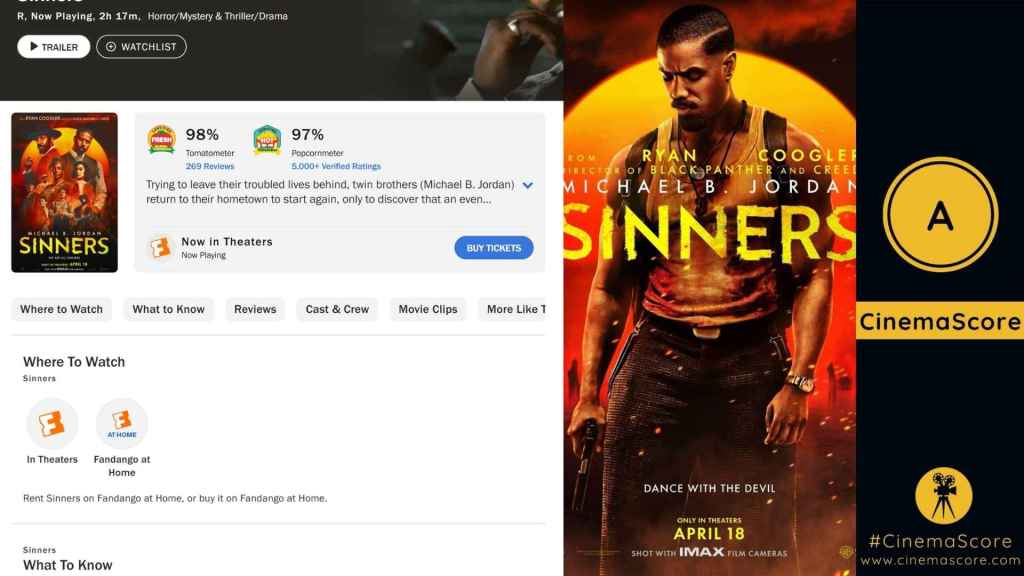
And still, people are acting like this movie is circling the drain after 72 hours. Never mind that it’s one of the highest-reviewed films of the year. Never mind that it has an A CinemaScore, something no horror movie has ever pulled off in 35 years. Never mind that nearly half the opening weekend audience was Black, a stunning turnout that proves the film is resonating with the very people it was made for. The international numbers—$15.4 million from 71 markets—are soft, yes. That’s a factor. But it’s not the final word. Movies like this don’t usually translate overseas because they’re too culturally specific, too rooted in an American identity that doesn’t export easily. Sinners is a movie steeped in the South, in rhythm and blood and fire and folklore. That’s not your typical global popcorn flick. And that’s okay.
The thing that’s getting lost in the discourse is that Sinners was never supposed to be a four-quadrant crowd-pleaser. It was a bold bet on a singular voice with a unique vision. It was a gamble, yes. But it’s a gamble that paid off with the only currency that really matters in 2025: conversation. People are talking about this movie. They’re tweeting about it. Reviewing it. Debating it. Watching it. And in a theatrical market that has seen original films fall off a cliff, that’s not just rare—it’s damn near miraculous.
So yeah, the juxtaposition with Once Upon a Time in Hollywood feels off. But it’s off because the whole industry is different now. Sinners is being judged by an outdated yardstick, while navigating a totally new terrain. Tarantino’s film walked out on stage during the last great summer of movies before the world shut down. Coogler’s film is opening a door back into something more hopeful—where the theatrical experience isn’t dead, just different. Where new voices can still take big swings. Where success isn’t just about numbers but about impact.
We should be celebrating that, not second-guessing it.

 Hollywood After Dark