

There’s a moment happening right now in Hollywood that feels a little too good to be true—like we’re watching a glitch in the system, or maybe, just maybe, a spark of hope for people who still care about movies made by actual human beings. Ryan Coogler’s Sinners opened this weekend and didn’t just make a splash—it cannonballed into the deep end of the domestic box office, hauling in $45.6 million. That alone would be a big enough win. But here’s where it gets historic: A Minecraft Movie, now in its third weekend, also cleared $40 million, making this the first time in over a decade that a single studio had two films pulling in $40 million or more in the same weekend. That’s not just rare. That’s a unicorn wearing a WB hat, sipping from a collectible Dune popcorn bucket.

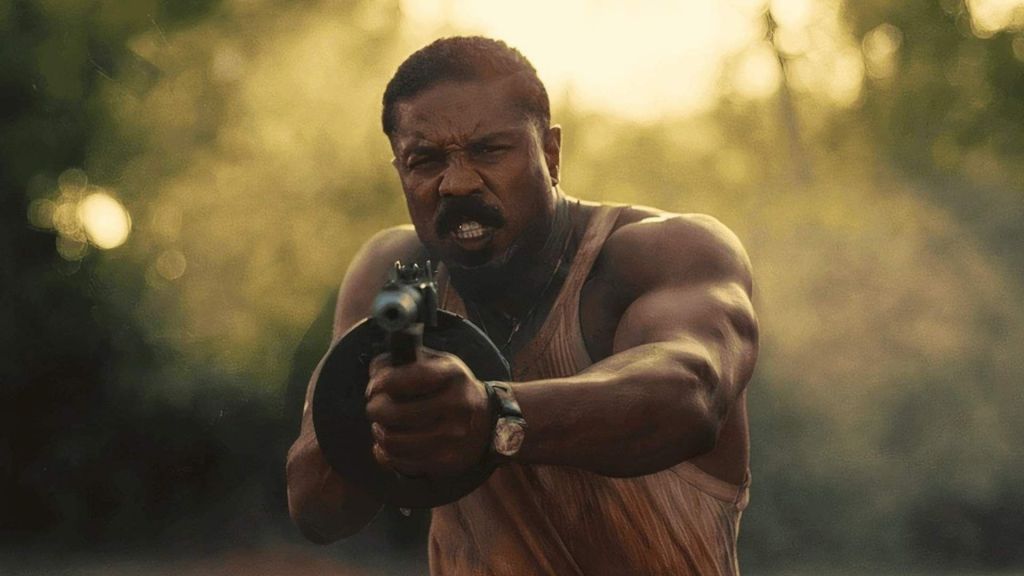
But here’s what’s even more interesting: Sinners didn’t do this by playing it safe. It didn’t ride the coattails of a franchise or rely on decades of IP familiarity. It came in raw, angry, poetic, and personal—exactly the kind of film that execs usually say is “better suited for streaming.” This is a movie about trauma, revenge, and generational guilt, directed with Coogler’s signature blend of heart and fury. It’s the kind of original R-rated genre film that doesn’t usually get this kind of shot anymore—and almost never opens this big.
The audience showed up, and they weren’t who you’d expect from a studio perspective. PostTrak data tells the real story: nearly half the audience was Black. White viewers made up 27%, Latino 14%, and Asian 6%. It’s a diverse cross-section of moviegoers, and they didn’t just show up—they loved it. We’re talking a 92% positive score, 84% “definite recommend,” and an “A” CinemaScore. That’s rare air for an R-rated horror-thriller. It’s the kind of word-of-mouth fuel that studios dream about and streaming algorithms can’t bottle.
And yet, while it’s flying high in North America, overseas, Sinners is struggling to find its footing. The international haul was just $15.4 million across 71 markets. That’s… not great. In fact, it’s a bit of a reality check. While the movie’s themes are universal in some sense—family, sin, redemption—the way they’re explored is very rooted in American culture and history. And releasing a movie called Sinners over Easter weekend? Let’s just say that’s a bold move in markets where religion is still a dominant cultural force.
It’s not just the subject matter or the timing, though. This film cost $90 million to make, and that’s before the marketing campaign even enters the chat. This wasn’t a cheap experiment. This was a major investment, and it came with a deal that makes it even more fascinating. Coogler negotiated a first-dollar gross participation and full ownership of the IP after 25 years—a deal that puts him in the rarefied company of Tarantino and Nolan. It’s a stake-in-the-ground moment for directors who want not just to make films, but to own a piece of what they create. If it works, it could open the door for more filmmakers—especially Black filmmakers—to demand the same.
But there’s a catch. That $90 million price tag has to pay off. First-dollar gross deals only work long-term if the movie makes real money. If Sinners doesn’t hold in its second and third weekends, if it doesn’t build globally over time, the studio heads will look at it as an outlier at best, or a cautionary tale at worst. You can already hear the boardroom whispering: “We tried the director-led model, it just didn’t travel.”
Which would be a shame. Because this movie deserves to travel. It deserves to be seen, discussed, wrestled with. And yes, it deserves to make money. But more than that, it deserves to matter. And it clearly does, at least here at home. That diverse turnout? That’s not a fluke. That’s what happens when a filmmaker tells a story that reflects the world around him and refuses to sand down the edges. It resonates because it’s personal. That’s what art is supposed to do.
So what happens next? If the legs are there, Sinners will build a solid domestic run, and maybe some international markets will catch up once the Easter hangover clears. If not, we’re still left with a victory—a film that came out swinging, that found its audience, and that proved original cinema isn’t dead, no matter how many think pieces say otherwise.
It’s too early to tell whether Coogler’s deal will be the start of a new era for filmmakers or just a fascinating detour. But what Sinners has already shown us is that there’s still a place for risk in this business. That sometimes, when the stars align and the audience is ready, a movie that dares to be about something can actually win.
And in today’s Hollywood, that might be the biggest sin of all.

 Hollywood After Dark