
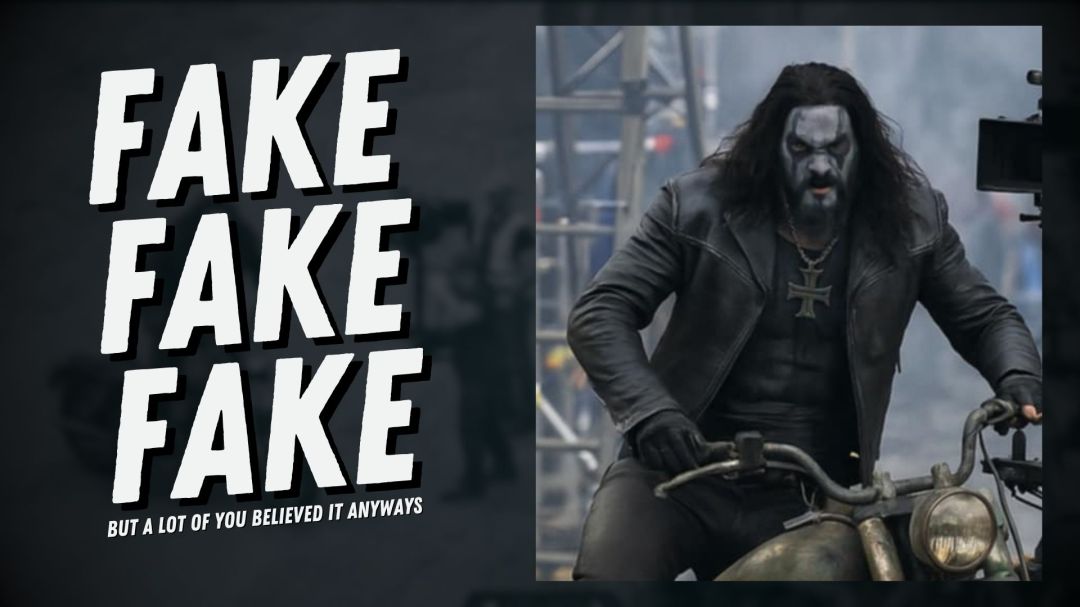
It started, as these things often do, with a blurry photo. Jason Momoa, confirmed to be playing Lobo in Supergirl: Woman of Tomorrow, appeared to be fully decked out in costume—black leather, eye makeup, riding a motorcycle. The image exploded across social media. People thought we were looking at our first leaked glimpse of the Main Man on set. The timing made sense. The movie is actively filming. Momoa’s casting is real. Why wouldn’t the image be?
Well… because it wasn’t. The photo was AI-generated, and created using ChatGPT. No studio leak. No clandestine paparazzi shot. Just a few prompts, some blending, and a post. And it worked—not because it was convincing, but because scoop culture has eroded our ability to question. We believe first. Ask later. Maybe.
The thing is, this isn’t some one-off hoax. This is where we are now. We’ve entered an era where the machinery of fandom—the hype cycles, the leakers, the speculators, the social clout chasers—is built less on journalism and more on illusion. And when the illusion is profitable, truth becomes optional.
Let’s take DanielRPK, a scooper who’s essentially turned fandom speculation into a subscription model. For as little as a couple bucks a month, you can get early access to scoops. For a little more, you get the “premium” stuff. There’s even a Discord where you can climb ranks and get deeper “intel” as you level up your loyalty. It’s not technically a pyramid scheme, but it operates on the same psychological logic—status, scarcity, and the thrill of being closer to the inside.
It’s less about verification, more about access. And it works because fans want to believe. Especially when that belief feels like a shortcut to power—knowing things before the masses, being ahead of the curve, collecting internet points in the form of retweets and forum clout. These scoopers have become oracles, and their audiences treat them accordingly.
But now AI is in the game, and it doesn’t need sources. It doesn’t need access. It just needs data to remix and a target audience eager to hit “share.” The Lobo image didn’t come from some hidden WB server—it came from a fantasy engine that’s trained to give people what they already want. And people wanted to believe, because all the pieces were there: Momoa is Lobo. Supergirl is filming. The image looked like something a bored assistant might snap behind the scenes. That’s all it took.
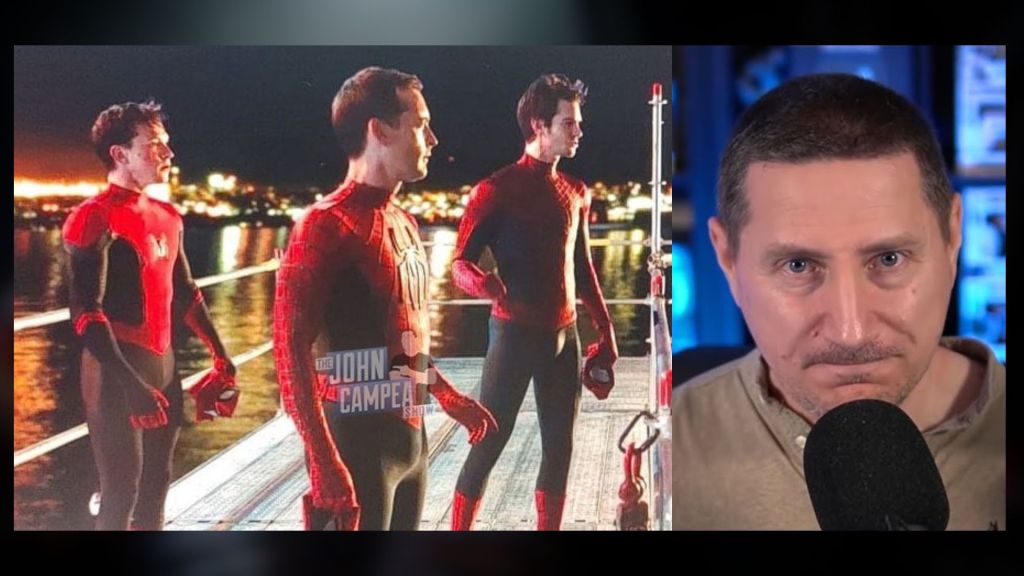
Of course, this is nothing new. Remember John Campea? He got his hands on early Spider-Man: No Way Home images that showed Tobey Maguire and Andrew Garfield suited up alongside Tom Holland, plus Charlie Cox as Matt Murdock. Campea thought the images were fake, watermarked them with his own name, and blasted them onto Twitter. When he realized they were real, he pulled them—but by then, the genie was out of the bottle. His streams blew up. Thousands more viewers. Tons of attention. But in the process, he burned bridges. Studios stopped taking his calls. He traded long-term trust for short-term gain.
And then there’s Mikey Sutton. I knew Mikey. We were friends for a few years. He got his big moment during the Sony-Marvel Spider-Man dispute, predicting that the wall-crawler would return to the MCU. He nailed that one. But then came the SnyderVerse talk—claims that Warner Bros. was going to restore Zack Snyder’s vision, bring him back for more films, greenlight the whole roadmap fans had been begging for. None of that happened. But the belief lingered. Still lingers. Mikey passed away in 2023, and there are fans today who treat his word as gospel.
That’s what this culture does. It doesn’t just create rumors—it creates belief systems. Scoop culture has metastasized into something more like fandom religion, where certain figures become saints of speculation, and doubting them is heresy. Even when nothing they predict comes true, the faith endures. Because the point was never truth. It was comfort. Hope. The idea that someone out there knows what’s coming next—and that you’re in on it.
The Lobo image is what happens when that ecosystem hits the singularity. AI doesn’t need a source. It doesn’t need credibility. It just mimics what already exists and delivers it with confidence. And it exposes how little verification we actually demand. If it feels familiar, if it checks enough boxes, if it scratches the right fan theory itch—we believe it. Or at least we want to.
And that’s the most dangerous part. Because the longer we operate in this space where fantasy and news are indistinguishable, the harder it becomes to know what’s real. The scoop economy doesn’t just erode trust—it turns trust into a commodity. And with AI accelerating that process, we’re not just dealing with bad sources or misinformed speculation anymore. We’re dealing with manufactured realities.
The Lobo photo wasn’t just a fake. It was a warning shot. If we can’t even tell the difference between a hoax and a scoop anymore, maybe it’s time to stop pretending this culture is about truth at all.

 Hollywood After Dark