

There was a time when the dream was to make it to Los Angeles. You know the story—land of palm trees, perpetual golden hour, and the faint scent of ambition mixed with exhaust. For filmmakers, actors, editors, hell, even background extras, LA was it. The gravitational pull of Hollywood was so strong you didn’t question the cost—you just packed up, found a roommate off Craigslist, and tried not to die of heatstroke while waiting for your big break.
I lived there in 2010. Two master bedrooms in North Hollywood, $1,275 a month. And it was nice. Good layout, solid insulation, great area. We landed the place during a brief economic window—the tail end of the Bush-era housing crash—so rents hadn’t yet gone nuclear. It was a good deal at the time. We split it three ways, made it work, and it actually felt possible to build a life around the business.
That feeling doesn’t exist anymore.

The Hollywood Reporter just dropped a piece about the state of post-production in LA, and it reads like an obituary. The scoring stages are silent. The post houses are underbooked. The jobs that used to keep hundreds of creatives afloat between tentpole gigs? Drying up. And it’s not because the talent left. It’s not even because the infrastructure is outdated. It’s still top-tier. But the cost of existing in LA has gone full dystopian—and the industry is quietly slipping away while the state pretends not to notice.
Gas is hovering around five bucks a gallon. Groceries are inflated. Rent is laughable. And California’s state income tax? Up to 13.3%. That’s insane. You can’t build a stable middle class in film around those numbers. The idea of struggling through your 20s and 30s until your career hits doesn’t work anymore because the financial floor just isn’t there. You either have money when you arrive, or you’re fighting an uphill battle just to keep your head above water.
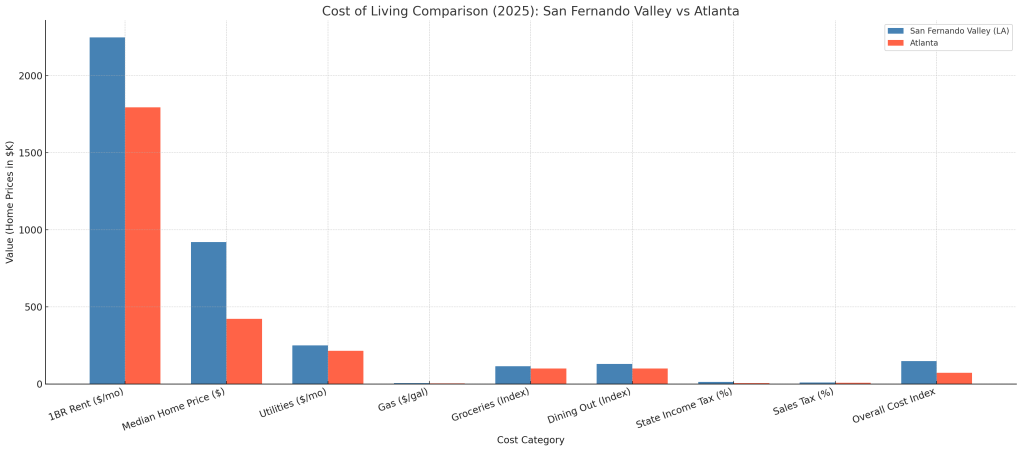
Meanwhile, other regions—many of which LA people used to scoff at—are quietly thriving. Georgia offers a 30% tax credit with fewer bureaucratic hurdles. New Mexico throws in cash rebates. Canada gives you production infrastructure and a favorable exchange rate. And Adam Scott and Rob Lowe recently dropped a truth bomb: it’s literally cheaper to fly a cast and crew to Ireland to shoot a film than to shoot it in California.
Let that sink in. Flying a dozen people across the Atlantic, feeding them, housing them, transporting gear—cheaper than pulling permits and staying local.
It’s not just a red flag. It’s a nuclear warning flare.
What we’re witnessing isn’t the death of the movie business. It’s the decentralization of it. The myth of LA as the only place you can make movies is officially over. You can edit from home. You can color correct over the cloud. Virtual production is rewriting everything we know about what “location” even means. What used to take a lot of money and a team on the ground now takes a stable internet connection and a good laptop.
Los Angeles will still be the boardroom. The deals, the branding, the press junkets—they’ll stay rooted in Hollywood. But the work? The cameras, the crews, the boots-on-the-ground filmmaking? That’s all headed somewhere else. And honestly, maybe that’s a good thing. LA hasn’t been affordable or artist-friendly in a long time. It’s become a place where aspiring filmmakers go to drown in debt, not discover their voice.
California could step in. There’s talk of boosting incentives. A few press releases float out every year trying to stoke excitement. But let’s be real: Sacramento moves at the speed of bureaucracy, and the movie industry has already lapped them twice. They’re too slow, too disconnected, and too focused on squeezing dollars out of a city that’s hemorrhaging jobs by the week.
I don’t live in LA anymore. I got out. And when I compare the cost of living now to the mortgage I pay in Washington? It’s not even close. I own a house now for less than what it costs to rent a two-bedroom apartment in a halfway decent neighborhood in the Valley. I still write. I still plan on making movies here in the Evergreen State. But I don’t miss the stress of wondering whether my career would be derailed because I needed to move my car before street sweeping.
In reality, the future of filmmaking is going to be increasingly virtual. Sure, people will still shoot on sets, and actors will still act—but much of the post-production process will shift to smaller, more agile studios using AI to streamline workflows and slash budgets. I recently heard that over 65 new studios specializing in AI filmmaking have opened in Los Angeles alone. That’s what LA is becoming: not the beating heart of production, but the nerve center for the business side of the creative endeavor. The place where tools are built, deals are struck, and the future is engineered—just not necessarily filmed.
Hollywood hasn’t just lost its grip on the industry—it’s lost the reason people came there in the first place. The creative magic hasn’t disappeared. It just moved where it’s wanted.
If Hollywood was Atlantis, then the cost of living is now the ocean.
And the rest of us? We’re just trying not to drown.

 Hollywood After Dark