
There’s something about A Goofy Movie that sticks with you. Maybe it’s the over-the-top ‘90s vibe, maybe it’s Powerline melting faces with “I2I,” or maybe it’s that quiet scene by the river, where Goofy and Max finally stop yelling and just talk. For a movie with talking cows, Bigfoot, and exploding possum mascots, it’s that small, emotional moment that hits hardest. Max finally opens up. Goofy listens. They don’t fix everything, but they understand each other. It’s messy, it’s awkward, and it’s kind of beautiful.
It’s also the kind of thing we don’t see nearly enough anymore.
As A Goofy Movie hits its 30th anniversary, it’s worth asking why it doesn’t get more credit. Sure, it’s a time capsule of ‘90s weirdness, and the soundtrack still goes harder than it has any right to. But under all that cartoon chaos is one of the most emotionally honest portrayals of fatherhood Disney has ever done. Goofy—an earnest, awkward single dad—is trying his best, even when it backfires. Max, the frustrated teen, just wants to be his own person without being smothered. What unfolds between them isn’t just hijinks. It’s a story about empathy. About vulnerability. About how hard it is to connect, and how much it matters when you finally do.
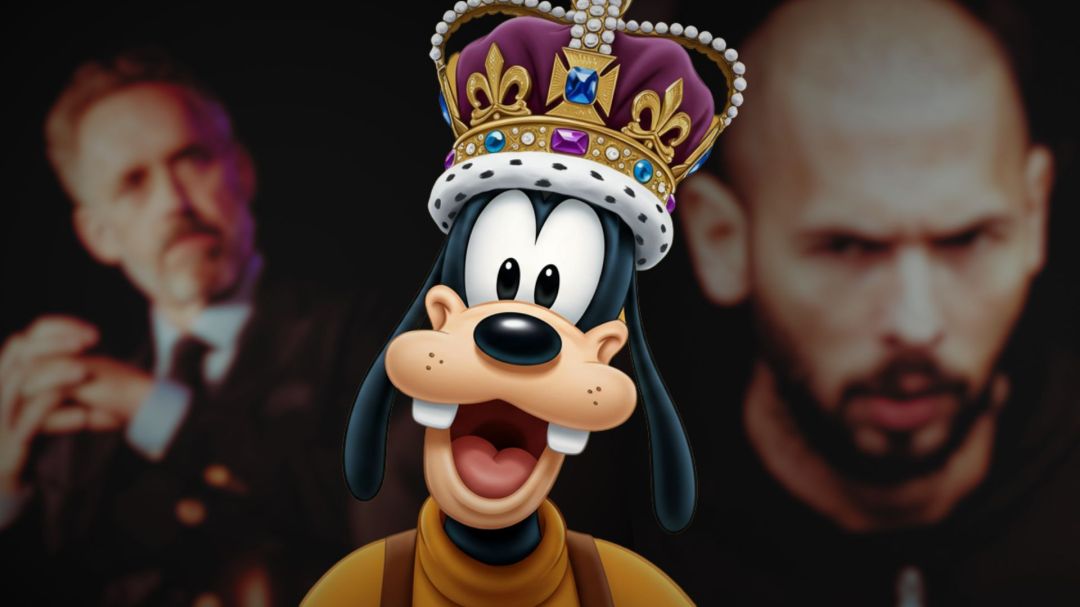
Meanwhile, in the real world, we’re watching an entire generation of young men get fed a steady diet of garbage advice disguised as self-help. Andrew Tate tells them empathy is weakness. Jordan Peterson frames gender roles in pseudo-mythology. You’ve got TikTok bros barking about “high-value men” while selling courses on how to manipulate women. And the thing is, it’s working. Not because these guys are right, but because they’re loud—and because a lot of young men are lost. They’re looking for answers, for structure, for someone to tell them how to be in a world that doesn’t seem to care. And in that vacuum, these toxic voices fill the void.

Pop culture used to do a better job of stepping in. If you grew up in the ’90s, you had dads on TV who felt real. Uncle Phil on Fresh Prince wasn’t just the tough authority figure—he was the emotional anchor, the one who held Will when he broke down. Carl Winslow was gruff but present. Danny Tanner wore his emotions on his sleeve. Dan Conner? He was tired, flawed, funny—and always there. These men weren’t perfect, but they modeled care, patience, and accountability. They helped raise a generation of kids—many of whom didn’t have dads at home—just by showing up on screen every week.
But who do Gen Z kids have? The media landscape is too fragmented now. There’s no unifying presence, no one like Phil or Carl who makes it through the noise. And when those characters are missing, people go looking elsewhere—and what they find is often cold, angry, and hollow. The louder voices win by default.
And that’s why Goofy matters. Because in a sea of toxic alpha posturing, he’s a dad who leads with love. He’s not slick. He’s not in control. He’s a dork in a station wagon doing his best. He embarrasses Max. He messes up. But he never stops trying to connect. And Max? Max eventually sees him. That’s the story. That’s the power. It’s not about being a perfect dad—it’s about being present, and willing to grow.
Even in our action movies, the emotional hook has always been there. Taken exploded not just because Liam Neeson was snapping necks, but because he was playing a father who would cross the planet to save his daughter. Same with Edge of Darkness—Mel Gibson’s character is a man unraveling in grief, driven by love and guilt and vengeance. These stories work because we understand the pain at their center. They’re violent, sure. But beneath the spectacle is a dad who cares.
Still, you can’t build a worldview on revenge fantasies. You need something grounded. Something human. Something like a single dad and his kid stuck in a car, trying to figure each other out before it’s too late.
Maybe that’s what makes A Goofy Movie so quietly radical. It’s not afraid of vulnerability. It doesn’t treat fatherhood like a punchline or a burden. It treats it like a relationship worth saving. Goofy never has the right words, and Max rarely wants to hear them. But they keep trying. They keep listening. And by the end, they actually see each other. That’s not weakness. That’s strength.
So maybe the fix isn’t another lecture or podcast or swaggering internet guru. Maybe it’s this weird little movie from 1995, with its oversized shoes and giant ears and heart on its sleeve. Maybe it’s a reminder that there’s still power in being goofy—being awkward, being open, being soft. Maybe if more guys watched this movie with their dads, or hell, just watched it by themselves, they’d start to see that there’s more to being a man than power or rage or control. That maybe the real strength is in showing up. Saying “I love you.” Trying again.
And maybe that’s enough.

 Hollywood After Dark