
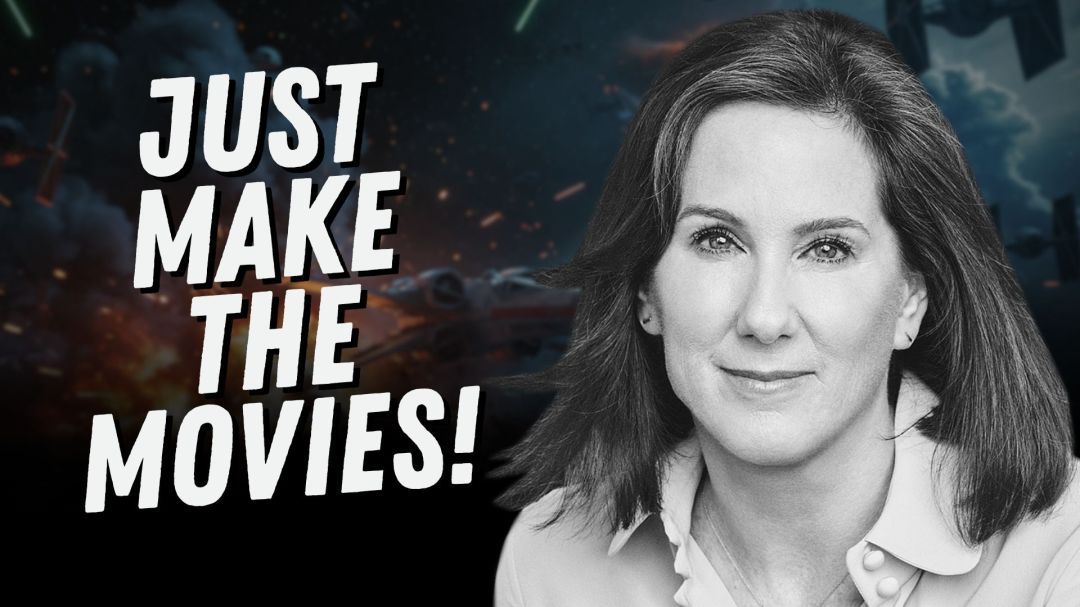
Tony Gilroy recently let slip in an interview that Lucasfilm is working on a Star Wars horror project. No official announcement. No trailer. Just a casual mention that, yeah, something’s apparently happening in that space. It wasn’t confirmation. It wasn’t denial. It was something Lucasfilm has become remarkably good at: vague, cryptic development chatter that may or may not lead anywhere. At this point, that kind of loose-lipped speculation isn’t intriguing—it’s exhausting.
Star Wars, as a brand, has become addicted to promises it can’t keep. What used to be a franchise defined by spectacle and delivery is now a carousel of title cards, executive reshuffles, and slow-fading buzz. Fans aren’t impatient—they’re fed up. And if Lucasfilm wants to claw back any shred of credibility, they need to stop talking about projects until they’re already shot, edited, and ready to be marketed. That’s it. No more sizzle reels. No more “we’re excited to explore” interviews. Just silence until it’s real.
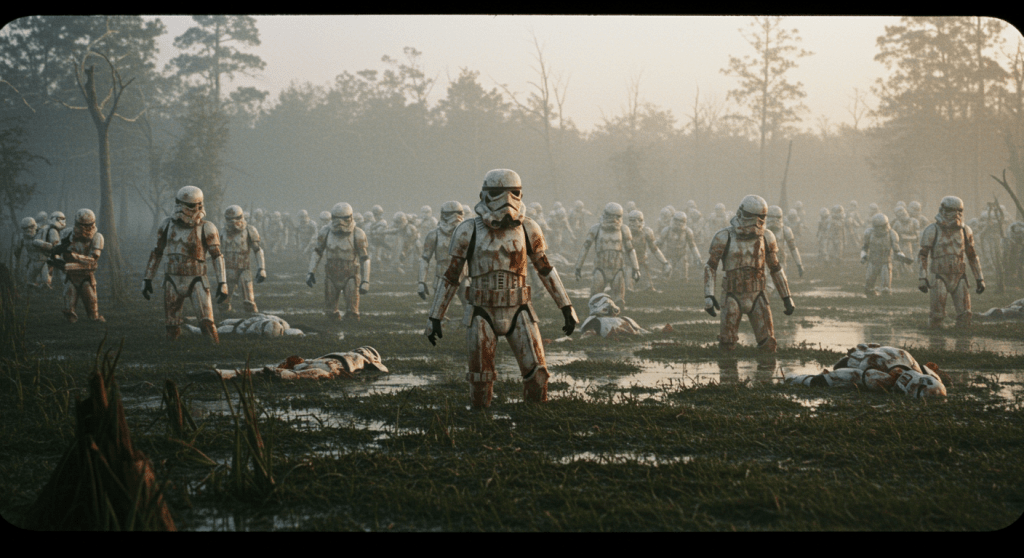
This culture of premature hype didn’t start with Tony Gilroy’s horror comment. It started back in 2017 when The Last Jedi cracked the fandom in two. Some hailed it as bold. Others saw it as betrayal. Regardless, Lucasfilm failed to respond with anything resembling confidence. Instead of standing behind the story, they scrambled. The Rise of Skywalker wasn’t a sequel—it was an apology tour. A Frankenstein’s monster of backpedals and retcons designed to appease everyone and please no one.
After The Last Jedi came Solo, it dropped into theaters just six months later with no real demand and no clear direction. It bombed. Not because the character was unpopular, but because the release felt like an afterthought. Bob Iger read the room and pulled the plug on theatrical releases in 2019, shifting Star Wars to television. It was a smart pivot—on paper.
Mandalorian was a hit, and for a brief moment, the fandom felt unified. But it didn’t last. The Book of Boba Fett was meandering. Obi-Wan Kenobi was uneven and felt like a movie awkwardly stretched into a series. Instead of building momentum, Disney+ became a holding pattern. And during that lull, the announcements kept rolling.
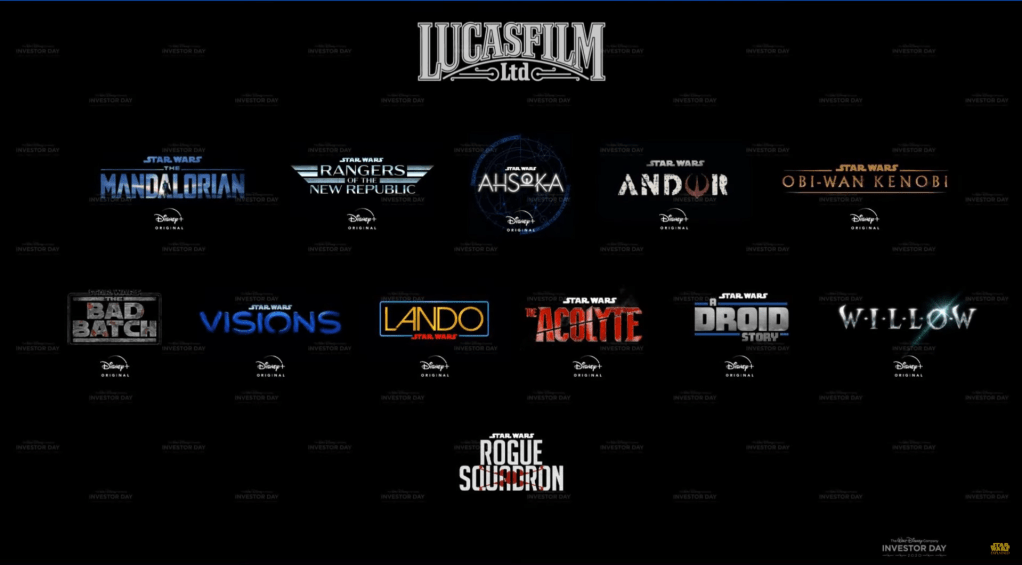
Rian Johnson’s trilogy. Patty Jenkins’ Rogue Squadron. Kevin Feige’s untitled movie. Taika Waititi’s bizarre comedy. The David Benioff and D.B. Weiss trilogy. The Lando show. A Jabba the Hutt crime epic. A sequel about Rey rebuilding the Jedi. Season two of The Acolyte possibly dead before season one even airs. None of this feels exciting anymore. It feels like noise.
It’s not that fans don’t want Star Wars. They do. The interest is there. But people are tired of getting hyped over logos and press blurbs for things that may never materialize. The longer Lucasfilm operates like this, the harder it becomes to win back that trust. And without trust, there’s no hype—just skepticism.
This isn’t some obscure problem hidden in the weeds of development pipelines. It’s a leadership issue. Kathleen Kennedy has been at the helm for over a decade. She’s one of the most accomplished producers in Hollywood history. But under her tenure, Star Wars has lacked a clear identity and consistent output. It’s been reactive instead of visionary, and now, with reports that she’s preparing to step down, there’s no clear successor. Projects aren’t being greenlit. The slate is frozen. Star Wars isn’t moving forward—it’s treading water.
The solution is simple. As I stated earlier, just shut up and shoot it. Don’t announce a movie until it’s been filmed. Don’t tease a series until it’s finished. Don’t let directors, actors, or executives float speculative ideas unless they’re locked in and funded. Let Star Wars disappear into the shadows for a while. Let something actually get made without the fanfare. Then, drop a trailer out of nowhere and let people be surprised again. Give them something to actually react to—something finished.
The best thing Lucasfilm could do right now isn’t another press conference or title reveal. It’s silence. Not because they have nothing to say, but because silence means they’re working. It means something might actually exist this time. Trust isn’t earned with flashy keynotes. It’s earned with results.
Star Wars isn’t dead. But it’s bruised. And the injury isn’t from bad storytelling—it’s from broken promises. The fans haven’t walked away. They’ve just stopped believing. If Lucasfilm wants to fix that, they need to stop chasing headlines and start chasing completion. Surprise the audience. Finish the work. And most importantly, keep quiet until it’s done.

 Hollywood After Dark