
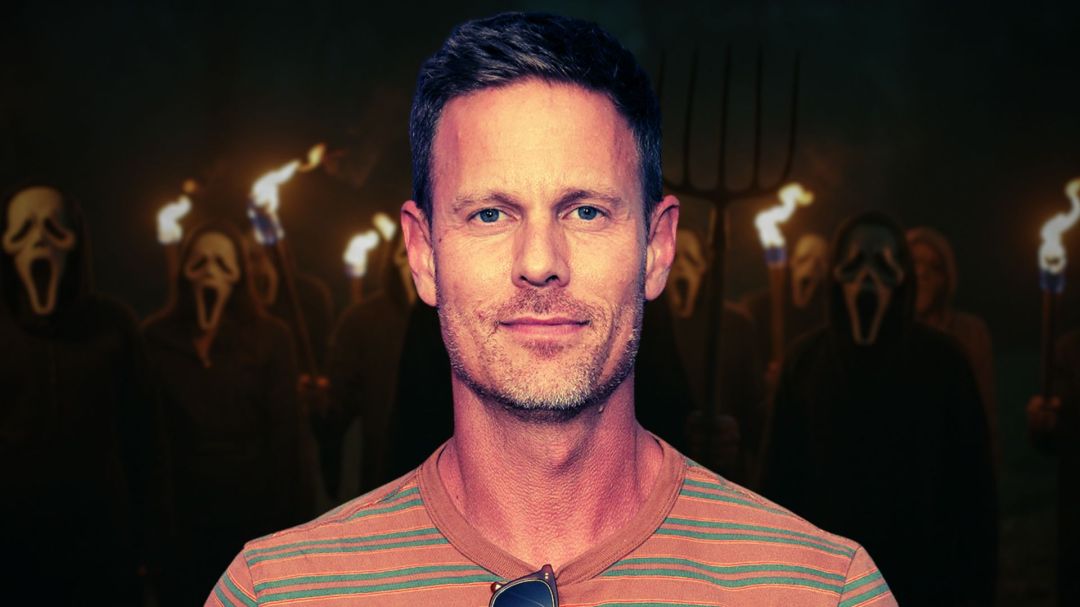
Christopher Landon should have had a win. Directing Scream 7 wasn’t just a job, it was a continuation of a long love affair with horror. He’s the guy behind Happy Death Day and Freaky, two inventive and wildly entertaining genre films that earned him serious love from horror fans. He’s not some studio hack brought in to play it safe. He’s the kind of filmmaker who makes horror with personality, with wit, with heart. Which is what makes what happened next feel like such a gut punch.
After actress Melissa Barrera was fired from the film over her social media posts about the Israel-Palestine conflict, Landon suddenly became the internet’s favorite villain. Never mind that he didn’t make the call. That was Spyglass Media, the production company. Landon wasn’t involved in the decision, but he had a title, he was public, and in the absence of clear answers, the mob made him the scapegoat.
This wasn’t polite disagreement. This wasn’t “Hey, we want answers.” This was unfiltered rage. Death threats. Harassment. People so furious about what they saw as an injustice that they lashed out at someone who had no control over the situation. And it’s important to acknowledge something here: a lot of the people who were angry about Melissa Barrera’s firing weren’t trolls. They were people who are genuinely passionate about human rights. They believed they were standing up for something. But they expressed that passion in the worst way possible—through rage, through intimidation, through threats.
That doesn’t make their values invalid. But it absolutely undermines their message. It weaponizes empathy and turns it into something cruel and chaotic. It’s the kind of activism that eats itself.
But those folks, as misplaced as their anger was, are not the same as the other toxic fan bases we’ve seen emerge online. They are not the Fandom Menace.
Now that’s a group that has turned outrage into a lifestyle. If you’ve been anywhere near geek spaces online in the last few years, you’ve probably seen them in action. The Fandom Menace emerged after The Last Jedi came out in 2017, positioning themselves as purists who were just trying to “save” Star Wars. But what they really did was create a movement fueled by performative anger and manufactured culture war outrage. They allegedly orchestrated review bombing campaigns, attacked creators and actors, and monetized it all through YouTube content that stoked resentment toward anything they considered “woke.”
And allegedly, they didn’t stop with Star Wars. They went after Moses Ingram for Obi-Wan Kenobi. Leslie Jones for Ghostbusters. Brie Larson for Captain Marvel. Leah Jeffries for Percy Jackson. And of course, Kelly Marie Tran, who had to leave social media entirely after the flood of racist and misogynistic attacks.
Unlike the folks who were furious about Barrera’s firing because they thought it was unjust, the Fandom Menace doesn’t care about human rights. They care about control. They care about keeping their favorite franchises frozen in amber, preserved exactly as they remember them, untouched by modern values or changing demographics. They’re not trying to make anything better. They just want to sit on a nail and complain like an old hound on a porch, howling about how the world changed and left them behind.
They’re not fans. They’re gatekeepers. And they’ve built an entire identity around making people afraid to create.
That’s what makes the whole thing so exhausting. Whether it’s misplaced moral outrage or manufactured culture war nonsense, the result is the same: people getting hurt. Good creators walking away. Conversations drowned in screaming.
And social media only makes it worse. It rewards the yelling. It lifts up the loudest, most emotionally volatile voices, no matter how wrong they are. Landon’s situation is just one example, but it’s part of a much bigger problem. The people who suffer most from this aren’t the ones making corporate decisions. It’s the artists. The actors. The storytellers. The human beings caught in the middle.
I know what that’s like. I’ve been doxed. I’ve been swatted. I’ve had death threats sent to my home. Not for directing a major film, but just for talking online. And once you’ve been on the receiving end of that, you never hear “just ignore them” the same way again.
So yeah, I get why Landon left. When it’s between making a movie and protecting your family, you walk. You shouldn’t have to, but you do.
Not all fandoms are toxic. But all fandoms are vulnerable. They can be co-opted by bad actors. They can be manipulated by outrage merchants. And sometimes, even the most well-intentioned supporters can cause real harm when they let emotion override empathy.
The best thing we can do is try to be better than that. To speak up, but not shout down. To hold people accountable without turning them into scapegoats. To remember that behind every project is a real person who might just be trying to do their job and make something cool.
And maybe, just maybe, the best fans are the ones who don’t let their passion turn into poison.

 Hollywood After Dark