
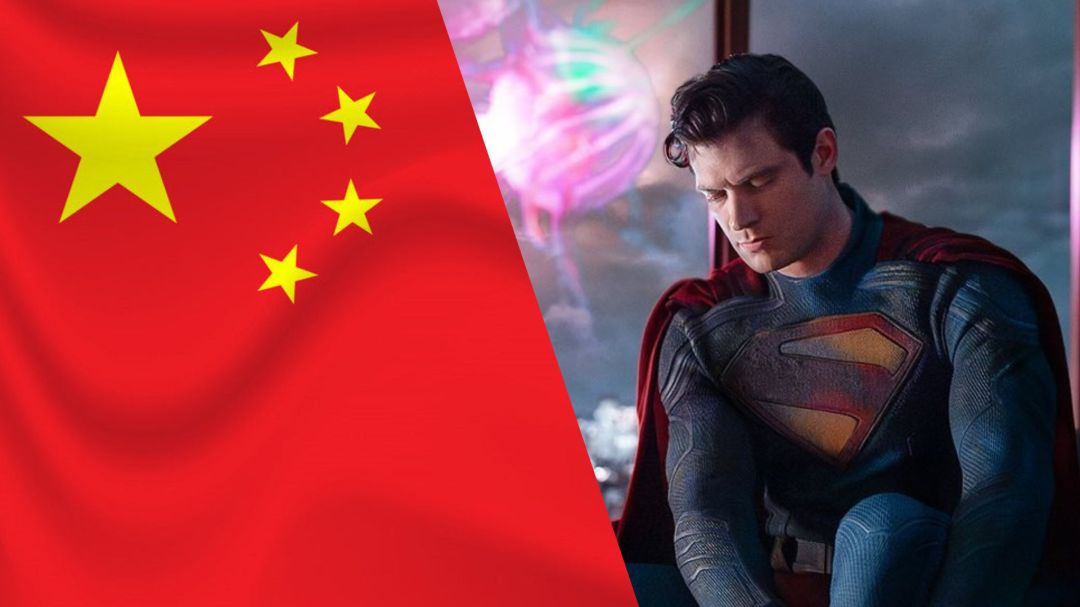
There was a time not too long ago when a major Hollywood studio wouldn’t dare greenlight a $200 million blockbuster without factoring in China. It was automatic. China was the second box office home for just about every tentpole release. Entire franchise arcs were practically built with Chinese audiences in mind, and for a while, that strategy paid off. Movies like Furious 7 made more money in China than they did in the U.S. It wasn’t just a big market. It was the market.
But the tide has turned, and this latest move from the Chinese government to limit Hollywood imports isn’t just political retaliation for increased U.S. tariffs. It’s a very clear message: “We’re good without you.” And if Hollywood isn’t panicking yet, it should be.
Let’s talk numbers. In 2019, imported films—mostly from Hollywood—accounted for over 30% of China’s box office. By 2024, that number was down to just over 21%. Last year it plummeted to 16.2%. That’s not just a dip. That’s a market shutting a door. And during that same period, Chinese domestic films absolutely exploded. Ne Zha 2 raked in nearly $2 billion globally, with the vast majority of that coming from China itself. And that’s not an outlier. Chinese audiences have made it clear. They want to see themselves on screen, telling their own stories, on their own terms.

So when China says it’s moderately reducing the number of American movies it imports this year, it’s not just about geopolitics. It’s about economics, audience demand, and a cultural shift away from Hollywood. In short, China doesn’t need U.S. movies to dominate its box office anymore.
Hollywood, however, is a different story. Studios are counting on international markets more than ever to justify the bloated budgets of today’s blockbusters. Domestic box office alone isn’t enough to recoup production and marketing costs. Streaming isn’t the safety net it once promised to be. And China, for all its headaches and censorship red tape, was still a potential goldmine. Losing it—or even just watching it shrink—could be catastrophic.
Case in point: Superman.
Warner Bros. is betting the farm on the upcoming Superman reboot to launch James Gunn’s new DC Universe. It’s not just a standalone film. It’s a foundation. The kind of movie that needs to be a hit everywhere to justify the rest of the franchise that follows. Merchandise, spin-offs, sequels—it all hinges on this one taking flight. But without access to the Chinese market, Superman is already flying with a weighted cape. And unlike Jurassic World or Fantastic Four, which are part of billion-dollar IPs with proven box office legs, this version of Superman is essentially starting from scratch. No Henry Cavill, no Snyderverse carryover, no guarantee that audiences—domestic or international—are going to show up in droves.
Now factor in that the last two DC films—The Flash and Blue Beetle—flatlined at the global box office with China in the mix. Removing that revenue entirely makes the launch of this cinematic universe even riskier. This isn’t about whether Superman will be good. It could be a masterpiece. But without China, the numbers it needs to justify an entire interconnected universe might simply not be achievable. And if the first movie in your new franchise doesn’t break even, what happens to the next one?
The truth is, Hollywood’s relationship with China has always been uneasy. Censorship battles, sudden delays, odd release schedules, and political sensitivities made it a market you could never fully count on, but you couldn’t ignore it either. Even now, some studios are still trying to find ways to play nice. Cutting scenes. Casting Chinese actors in otherwise thankless roles. Shooting China-specific footage to squeeze past censors. But it’s starting to feel desperate.
And here’s the kicker. China doesn’t care. It doesn’t need Tom Cruise’s last Mission: Impossible. That franchise is ending anyway. It doesn’t need Fast & Furious to come roaring back for round eleven. Chinese filmmakers are making billion-dollar films at home, with local stars and culturally relevant stories. For them, Hollywood is becoming background noise.
And while yes, some American movies might still sneak in—likely the ones that are apolitical, spectacle-driven, and easy to subtitle—the days of every blockbuster getting a wide Chinese release are fading fast. What used to be a crucial territory is becoming a question mark on the distribution calendar.
So where does that leave Hollywood?
Panicked, probably. Especially the executives who’ve spent the last ten years assuming China would always be there to bail out underperforming movies. This latest move from Beijing just proved otherwise. It’s a flex. And it’s a reminder that the era of global dominance is over. Hollywood is now just one of many content creators in a world that has more screens, more voices, and more options than ever before.
If there’s a silver lining here, maybe it’s this. Hollywood might finally be forced to stop chasing box office success in markets that don’t want it and start focusing on making better movies for the people who do. Maybe the industry stops thinking globally and starts thinking creatively. Because the model of “build a four-quadrant franchise and hope China shows up” isn’t just outdated. It’s broken.
Hollywood needs China. That much is clear. But China? China has moved on.

 Hollywood After Dark