

James Cameron wants to cut the cost of blockbuster filmmaking in half. Not by shrinking sets, not by cutting corners, and definitely not by giving up the kind of sweeping, high-concept visual storytelling he’s built his career on. What he’s talking about is using generative AI to speed up production, especially in the world of visual effects. And while that might sound like something lifted straight from Skynet’s to-do list, Cameron isn’t here to warn us about the rise of the machines. Not this time. He’s suggesting we learn how to work with them—before the entire system collapses under the weight of its own unsustainable economics.
Because let’s be honest. Hollywood doesn’t have a money problem so much as it has a money management problem. When a movie like The Electric State clocks in at over $300 million, and multiple Marvel films are flirting with the $250 million range, it’s hard not to wonder how long this model can last. Especially when audiences are increasingly opting to watch big releases from the comfort of their couch. Studios are tightening belts. Filmmakers are being forced to make creative compromises. The solution might not be to spend less, but to spend smarter. That’s where AI enters the conversation—not as a job killer, but as a kind of tireless creative partner. One that doesn’t need sleep, snacks, or a million rounds of feedback to get it right.
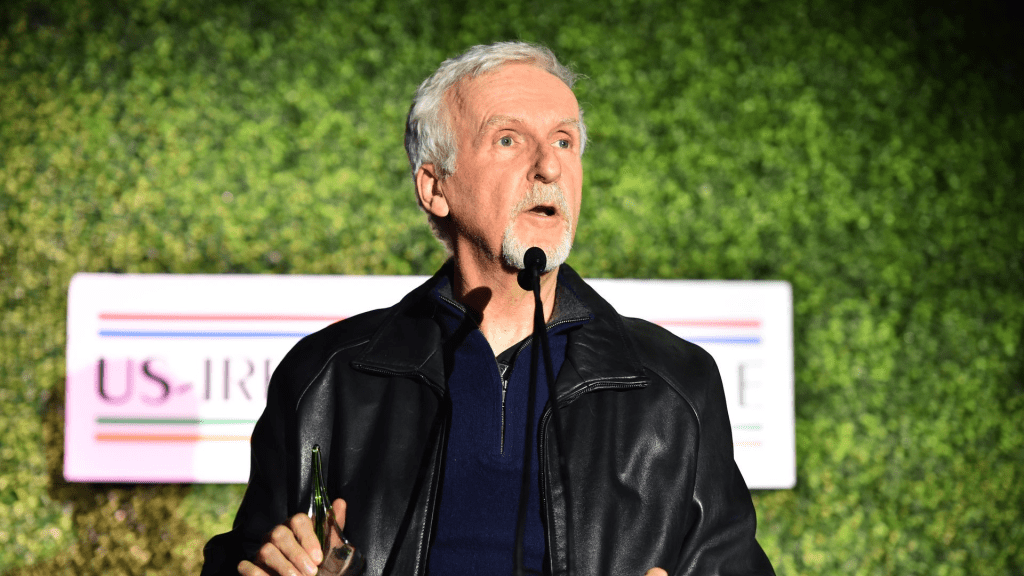
Cameron recently dropped in on Meta CTO Andrew Bosworth’s podcast and laid it all out. If we want to keep making large-scale, VFX-heavy epics, we need to find ways to move faster without sacrificing quality. He’s not advocating for slashing headcount or outsourcing artistry to algorithms. He’s talking about giving talented people tools that let them move at the speed of inspiration. If a visual effects shot that used to take ten days can now be finished in five, that’s not just a budget saver—it’s a creative gift. Artists can redirect their time toward the polish, the emotion, the subtle touches that elevate a good film into a great one.
And he’s not just speculating from the sidelines. Cameron is now on the board of Stability AI, the company behind Stable Diffusion. That’s not a passive endorsement. It’s a signal that he wants a hand in shaping how this technology is developed and deployed in the film industry. This isn’t a cash grab or a brand play. Cameron says he joined to learn. To understand what it takes to build purpose-driven AI tools that can actually plug into a VFX workflow. To find out how models are trained, what kind of computing power they need, and how to avoid turning them into creative crutches. He’s approaching it like he approaches most things—with curiosity, a bit of skepticism, and the intent to use whatever he learns to make movies better.
Of course, there’s a delicious bit of irony here. This is James Cameron we’re talking about. The man who gave us The Terminator, T2, and the original cinematic warning about AI going off the rails. If anyone should be side-eying this technology, it’s him. But his view is more layered than you might expect. Cameron draws a comparison between AI and human artists. We’re all “models” in a sense—constantly trained by the stories we absorb, the visuals we admire, the world around us. Our creativity is filtered through a lifetime of influence. The question isn’t what you take in. It’s what you put out. That’s where the legal and ethical attention should be. Not in what an AI sees, but in what it ends up creating. If the output is original, valuable, and respectful of its influences, then it has as much a place in the creative pipeline as any other tool.
Which brings us to an interesting twist. Cameron has also confirmed that his upcoming film, Avatar: Fire and Ash, will feature a title card letting audiences know that no generative AI was used in its creation. Not a single frame. From someone now actively exploring the possibilities of AI, that might feel like a contradiction. But really, it’s just a matter of creative choice. Cameron sees AI as a tool, not a requirement. Sometimes, the best choice is the traditional one. In the case of Avatar, a franchise built on painstaking world-building and meticulously handcrafted effects, the decision to go AI-free aligns with its identity. It’s not about sending a message. It’s about staying true to the process that makes those films what they are.
Meanwhile, the rest of Hollywood is catching up. In late 2024, Lionsgate announced a partnership with Runway ML to create a custom AI model trained on their massive archive of film and TV content. The goal is simple: make the production pipeline faster, more flexible, and more accessible to filmmakers at every level. Storyboarding, background plates, post-production tweaks—AI is being built directly into the process, not as a gimmick but as a long-term strategy. This isn’t some experiment hiding in a tech incubator. This is one of the biggest studios in the business placing a real bet on AI’s potential to reshape how movies get made.
This moment isn’t about humans versus machines. It’s about filmmakers, artists, and storytellers negotiating with a new kind of collaborator. What Cameron is advocating isn’t radical. It’s practical. If we want to keep telling massive, visual stories on the scale audiences love, we need to find ways to do it more sustainably. Generative AI might not be a silver bullet, but it’s getting close to being a reliable tool for solving real problems in real time.
And here’s the kicker. If James Cameron—the man who literally created Skynet—can see the upside, maybe we owe it to ourselves to listen. Maybe AI isn’t the villain in this story. Maybe it’s the unexpected side character that ends up saving the day. If used with intention, purpose, and care, generative AI might just help usher in a new golden age of cinematic storytelling. One where creativity and efficiency no longer have to be at odds.

 Hollywood After Dark