
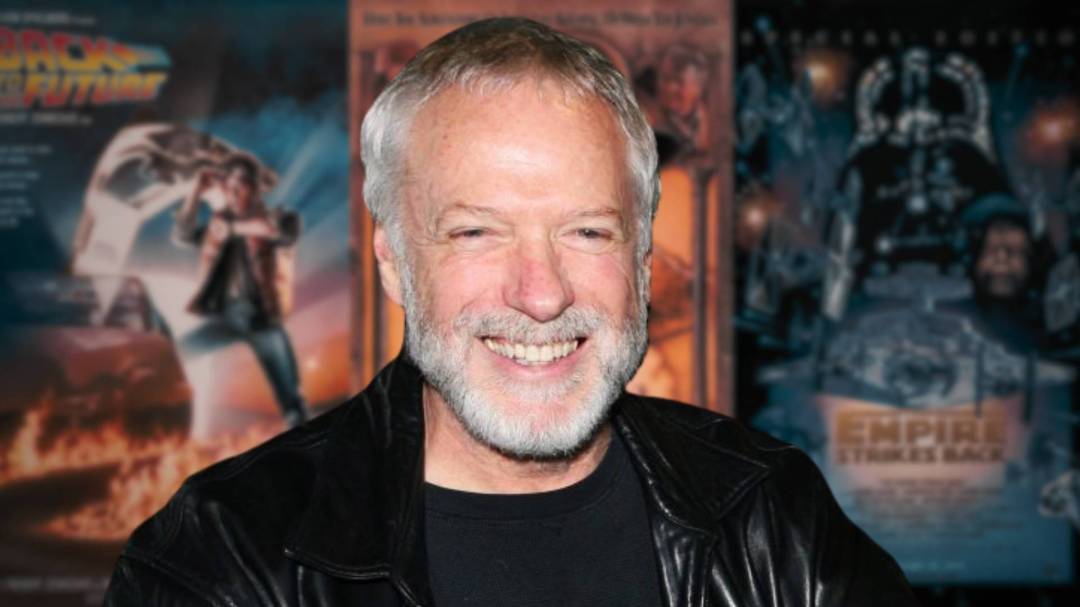
Those of us who grew up in the ’70s, ’80s, and ’90s — the Gen Xers, Millennials, and Zennials — we love movies. Not just the stories themselves, but the feeling they gave us. That sense of adventure, action, dread, or emotion that made us fall in love with cinema in the first place. And for so many of us, that feeling started before the opening credits ever rolled — it started with a poster.
And there was no greater artist in that realm than Drew Struzan, who sadly passed away after a battle with cancer. I didn’t know the man personally, but I knew his work — we all did. His paintings didn’t just promote movies; they defined what movies felt like.
Think about it: Indiana Jones, Back to the Future, Star Wars, The Thing, Cannonball Run, E.T., The Goonies. These weren’t just films — they were moments in time, stamped into memory by Drew’s brush. His portraits didn’t simply show the actors; they captured the myth. His light and shadow made even familiar faces feel larger than life, promising adventure, danger, and heart all in a single frame.
That’s what made Struzan’s art special — it lived in the imagination. Look at The Thing poster: the faceless figure in the parka, the blinding light bursting from within. You don’t need to know who it is; that mystery is the story. The image alone tells you everything you need to feel — isolation, terror, awe. That was Drew’s gift.
But Hollywood has changed. The posters we see now are sterile, computer-rendered collages of floating heads and digital backdrops. They sell content, not adventure. And while technology moves forward, something human has been lost along the way — that craftsmanship, that sense of wonder.
Struzan’s work reminds us of a time when movie posters were not just advertisements but artifacts. They hung on bedroom walls, in dorm rooms, in video stores — portals to worlds we couldn’t wait to explore. And though he’s no longer with us, his art is eternal. You can’t think of Raiders of the Lost Ark or Back to the Future without seeing his brushwork. His influence is stitched into the DNA of film culture itself.
While Drew Struzan may have moved on to another plane, his work continues to guide us. Every time we glance at one of his posters, we’re reminded of why we fell in love with movies — because they could make us feel something bigger than ourselves. His legacy isn’t just in museums or collector books; it’s in the hearts of anyone who ever stared at one of his posters and thought, I want to go there.

 Hollywood After Dark