
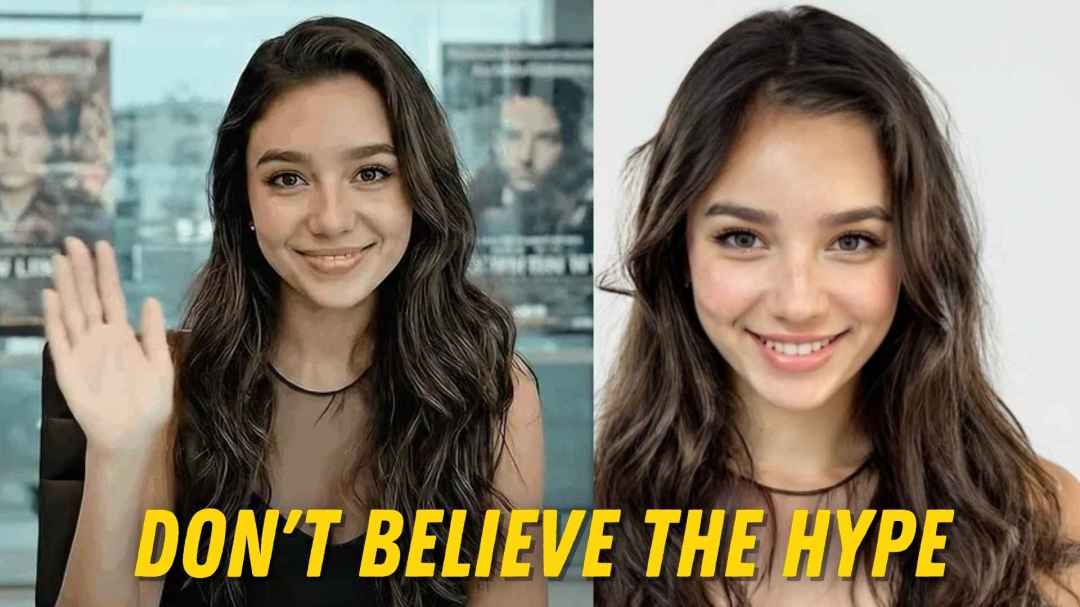
Hollywood is always ready to chase the next big thing, even if it doesn’t actually exist yet. Right now, that “thing” is named Tilly Norwood, the so-called first AI actress being floated by unnamed agents as if she’s destined to sit alongside Scarlett Johansson on the call sheet. Tilly is supposed to represent a turning point: a digital starlet who never ages, never takes a break, and can appear across movies, shows, and ad campaigns without complaint. The pitch sounds bold. The reality is thin.
Tilly’s résumé is a two-minute comedy sketch called The AI Commissioner. She speaks maybe six words. Her performance looks fine for a demo reel, but not remotely like a breakthrough. It’s not a career. It’s a test clip. Yet she’s already being paraded through festival coverage and industry trades as if she’s proof that Hollywood is about to embrace AI actors as mainstream talent.
I don’t have a problem with AI in film. In the visual effects space, it’s already proving useful — cleaning up shots, de-aging actors, filling out backgrounds, and saving productions weeks of labor. It’s a tool like any other, and when it works, it can be invisible. That’s the kind of progress that actually helps. But trying to crown a digital actress as the “next big star” isn’t progress. It’s a marketing tactic.
We know the technology isn’t ready because Lionsgate just admitted they couldn’t get a full-length AI feature off the ground with Runway ML. If a studio with money and resources can’t make a 90-minute movie work, then the idea that one sketch with a few lines of dialogue proves anything is hard to take seriously. What we’re seeing with Tilly isn’t the arrival of a new kind of performer; it’s the packaging of an experiment as if it’s already a revolution.
That packaging is deliberate. Tilly exists less as an actress and more as a pitch. She shows up at the Zurich Film Festival right as the industry is debating AI. Trade outlets amplify the story. Actors and directors react with anger online. Suddenly everyone’s talking about her. From a publicity standpoint, it’s brilliant. From a creative standpoint, it’s paper-thin.
And that’s the real tell: Tilly isn’t about audiences, she’s about investors. She’s the shiny example that lets a creator walk into meetings and say, “I turned a digital character into a headline.” It’s leverage. It’s a way to secure deals and open doors. The outrage from actors and filmmakers isn’t a bug — it’s part of the design.
To be fair, the skepticism is earned. Melissa Barrera called the whole thing “gross.” Others have pointed out that agencies circling an AI creation while real actors are fighting for work sends the worst possible message about what this industry values. And audiences don’t seem eager to accept a fake performer as a real star either. People connect with faces and voices they can believe in. Six words in a festival short doesn’t create that.
That doesn’t mean AI performers won’t have a future. They probably will. Someone will eventually figure out how to build a digital character that can carry a story, or at least convincingly fill the gaps that human performers can’t. When that happens, we’ll have to deal with the larger questions: labor rights, ownership, and what it means to act. But Tilly isn’t that. She’s a stunt dressed up as a star.
So when I see headlines asking if this is the beginning of the end for human actors, I don’t buy it. Not because the technology is impossible, but because what we’re being shown right now doesn’t come close to proving the case. It’s one sketch, six words, and a lot of spin. Useful as a demo, clever as a publicity play, but not evidence of the future.

 Hollywood After Dark