
People love to argue about what’s going to save the movies. Some still point to superheroes, Star Wars, or whatever legacy IP gets dusted off next. And to be fair, those franchises can work—when they feel like events. Avengers: Endgame wasn’t just a movie; it was a cultural happening. The Force Awakens carried that same energy, pulling people into theaters just to share the moment. James Cameron’s Avatar: The Way of Water cleared two billion worldwide not because audiences craved more lore, but because Cameron made it a spectacle you had to see on the biggest screen possible. That’s what works. The problem is Hollywood keeps trying to make every new installment an event, and audiences know the difference. Magic can’t be mass-produced.
The irony is the genres most studios used to treat as “niche” are the ones reliably creating that must-see feeling. Horror and anime, long considered side hustles, are doing the heavy lifting at the box office. They might not always hit billion-dollar heights, but they’re consistent, cost-effective, and, most importantly, they still feel special.
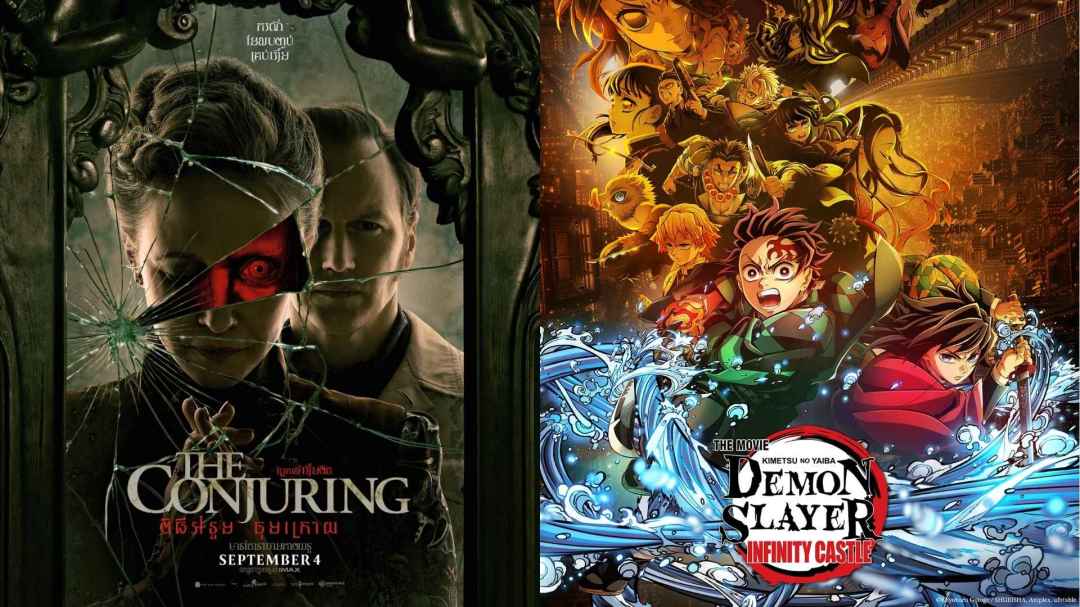
Take The Conjuring: Last Rites. Ninth film in a ten-year-old franchise, budgeted at $55 million, and it opened to $84 million domestically. It’s already topping $300 million worldwide. That’s not just a win—it’s proof horror hasn’t lost its grip. And it’s hardly alone. Smile 2 cost $28 million and earned nearly $140 million globally. M3GAN, Barbarian, The Nun 2, Get Out—time and again, horror proves it doesn’t need A-list stars or nine-figure budgets. It sells fear, and fear is universal. Better yet, horror has legs. Even modest openers can build momentum as word-of-mouth spreads, dragging new audiences in week after week.
Anime, meanwhile, has gone from subculture to global juggernaut. Demon Slayer: Infinity Castle just smashed the North American anime record with a $70 million opening, doubling the mark set by Pokémon: The First Movie back in 1999. Worldwide, it cleared $132 million in its first weekend. That’s an event. The same pattern shows up with Dragon Ball Super: Broly, Super Hero, even Your Name. Fans treat these releases like one-night-only concerts, racing to theaters to be part of the moment. The catch? Anime tends to burn bright and fast. Opening weekend is a frenzy, but by week two, attendance craters and screens vanish. Right now, anime is all fireworks—spectacular, but short-lived.
That’s where horror has the advantage. A strong horror movie doesn’t just spike; it lingers. A creepy smile, a shocking twist, a cursed doll—these things dig into the culture and keep audiences curious long after the first weekend. Anime has the spectacle, horror has the staying power. If distributors could extend anime’s runs and broaden its appeal, it could rival horror as a reliable pillar for theaters instead of just a fan-driven flash.
Compare that to tentpoles. Budgets balloon into the hundreds of millions, and the returns are no longer guaranteed. The Flash cost nearly $200 million and limped past $270 million worldwide. The Marvels sputtered out under $220 million. Meanwhile, Smile 2 delivered five times its budget, and Demon Slayer broke records with a fraction of the resources. Studios keep betting on billion-dollar jackpots, but horror and anime keep proving steady, mid-scale events are healthier for theaters.
That’s not to say blockbusters can’t work. Avatar is proof that event cinema still draws crowds, though even Cameron’s franchise risks losing mystique with sequels arriving every three years instead of every thirteen. If Avatar itself can risk overexposure, what hope does Ant-Man 4 really have? The lesson is simple: audiences crave novelty, rarity, and spectacle. Horror and anime deliver that now because they’re not pretending to be everyday occurrences. They show up, hit hard, and leave an impression.
Superheroes aren’t dead, and legacy franchises aren’t worthless. They still have juice when treated as the cultural moments they’re meant to be. But if we’re talking about what’s actually keeping theaters alive week to week, it’s not capes and lightsabers—it’s haunted nuns and demon slayers. Horror and anime aren’t side dishes anymore. They’re the main course. And if studios are smart, they’ll stop flooding the calendar with disposable “events” and start building the real ones.

 Hollywood After Dark