
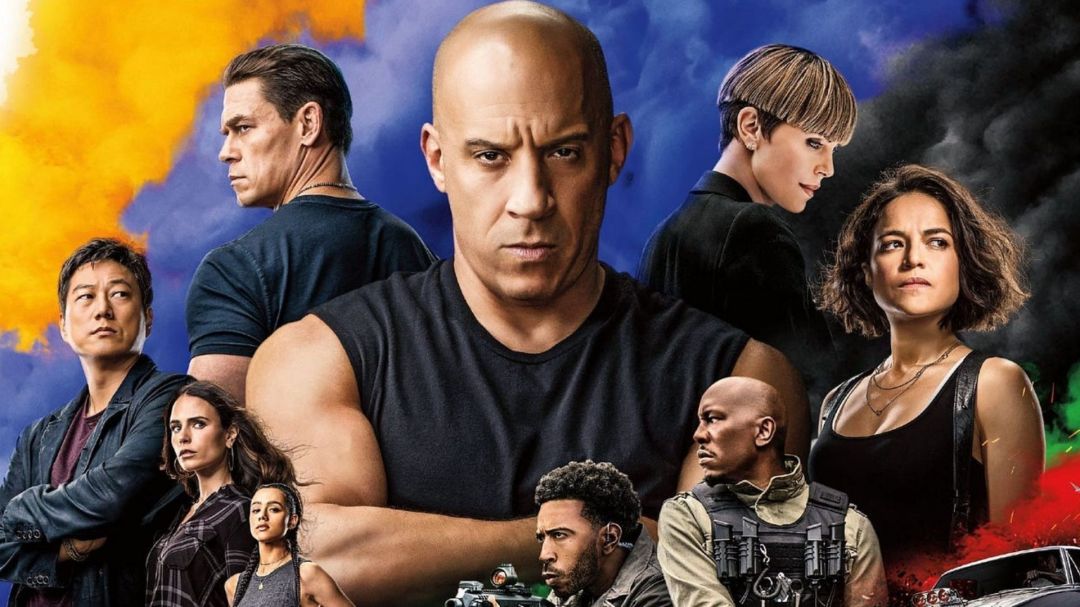
Fast & Furious used to be about family. Now it’s about physics-defying miracles and space trips that play like a punchline nobody asked for. And the wildest part? Even Donna Langley over at Universal, the studio boss who’s overseen this billion-dollar beast, seems to be apologizing for it. Which, if you’ve been along for the ride since 2001 like me, feels both surreal and inevitable.
I was there at the start. Literally. When the first Fast and the Furious opened, I was working at a drive-in theater in San Diego. Our lot was packed—over 700 cars lined up, engines rumbling, bass rattling windows. San Diego had the biggest street-racing scene in the country back then, so the film wasn’t just a movie; it was a mirror. It caught a culture that was already buzzing in the streets and threw it on a forty-foot screen. I still remember the night like it was yesterday. And yeah, I even scored a DVD copy two weeks before release thanks to a buddy at a record shop who sold movies under the table. From that point on, I was hooked.
The saga evolved, sometimes gracefully, sometimes with all the subtlety of a Dodge Charger smashing through a concrete wall. Fast Five was the turning point, the reinvention that saved the franchise from its own skid. Suddenly, it wasn’t about DVD players or hijacking eighteen-wheelers anymore—it was about elaborate heists, globe-trotting stunts, and a cast that had grown into a dysfunctional but lovable cinematic family. And it worked. Furious 7 pulled in $1.5 billion worldwide, a juggernaut propelled by Paul Walker’s tragic passing and the emotional weight of his farewell. For fans, it was catharsis wrapped in NOS fumes.
But then came F9.
The joke had been circling for years: “What’s next? Fast & Furious goes to space?” Fans joked about it, filmmakers teased it, and then Universal actually did it. Tyrese and Ludacris strapped into a rocket car and launched beyond Earth’s atmosphere. And you know what? It didn’t feel bold or exhilarating—it felt dumb. Not because the franchise went to space, but because by the time they got there, the franchise had already started running on fumes. F9 was self-aware in the worst way, asking aloud the questions audiences were already muttering: “Why are we still doing this? What’s the point?” Instead of a high-octane thrill, it felt like an admission that maybe the tank was empty.
Universal seems to have realized it too. Fast X came along with a staggering $340 million budget and managed to gross around $714 million worldwide. On paper, that’s not bad—but in the world of Hollywood accounting, those margins aren’t sustainable. Especially when you’re juggling cast drama, Justin Lin walking away mid-production, and a leading man whose off-screen reputation is… complicated. You can only burn cash for so long before the suits start looking for a brake pedal.
So now the studio is promising a return to roots. Fast X: Part 2 (a.k.a. Fast & Furious 11) is being billed as the grand finale, slated for April 2027. Vin Diesel, ever the patriarch, laid out the conditions: the film must be set back in Los Angeles, it must focus on street racing and car culture, and somehow, some way, Brian O’Conner must return. That last part is the most delicate. Paul Walker’s death still hangs heavy, and the thought of resurrecting Brian—digitally or otherwise—runs the risk of cheapening a farewell that fans still hold sacred. But it also speaks to how desperate Universal is to stick the landing, to close this saga in a way that honors both its roots and its legacy.
The numbers are still jaw-dropping: over $7 billion grossed across twelve films, on combined budgets of about $1.75 billion. By almost any measure, that’s success. But behind those numbers is a franchise struggling to remember why it mattered in the first place. It wasn’t the submarines, or the skyscraper jumps, or even the rocket cars—it was the streets, the culture, the sense that these characters were part of something bigger than themselves, yet still grounded in a world you could squint and recognize.
And maybe that’s why Donna Langley is walking back the space stunt. Because even if you can make a Dodge Pontiac Fiero break orbit, you can’t fake authenticity. The franchise started with quarter-mile races under California lights. If Universal wants to end it right, that’s exactly where it needs to finish.

 Hollywood After Dark