
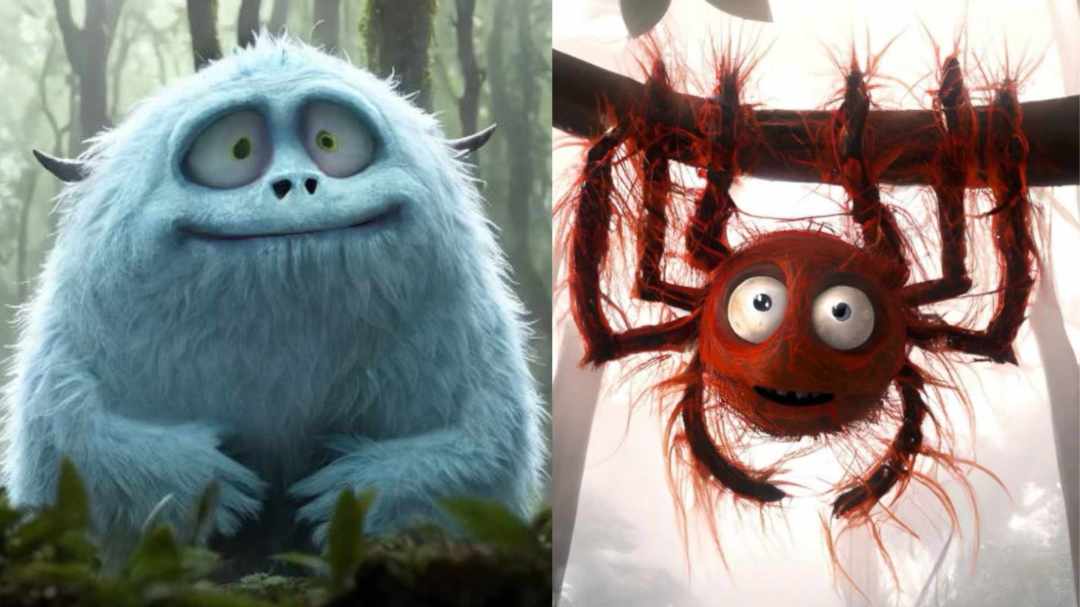
The Critterz short film dropped back in 2023, and it was a delight. I watched it then, I watched it again recently with my kids, and they thought it was really cute. Which tells you everything you need to know: it doesn’t matter what tools you use to make something, so long as you can tell a story that lands. As George Lucas said once — and I’m paraphrasing here — anything that evokes emotion is art. That’s it. Point blank, full stop.
And that’s what Critterz did in short form. Now it’s leveling up into something much bigger — the first feature-length animated film made with heavy involvement from AI. A $30 million movie, built in nine months, with a team of about thirty people. If you’ve ever followed animation, you know that’s insane. Normally these things take three to five years and cost north of $150 million, with armies of animators sweating away in render farms and storyboard caves. But this? This is scrappy, fast, and flat-out experimental.
And if you go back to the original short, you can see the blueprint. Chad Nelson and his team used OpenAI’s DALL·E to generate characters and backgrounds, sure, but they didn’t just dump the images into a slideshow and call it a day. They took those stills and pulled them into motion. Facial expressions came alive through motion capture rigs. Environments were stitched together with the help of traditional artists. Backgrounds moved, creatures emoted, and suddenly this pile of AI experiments turned into a quirky little “animated science documentary.” The process was messy, imperfect, a patchwork of new tech and old tricks. But it made you laugh, and it made you care. That’s art.
Of course, now the knives are out. There’s a crowd of people sharpening their arguments, ready to call Critterz a tech-bro fever dream, an affront to art, or just stolen property dressed up in a cutesy woodland skin. And look — I get the anxiety. AI in Hollywood is a live wire. It freaks people out. Writers and actors have fought for protections, lawsuits are flying, and the debate is vicious. But here’s my stance: in this case, the argument doesn’t stick. Critterz isn’t just machine output. It’s humans sketching designs, writing scripts, and performing voices. It’s a small team bending tools to their will, the way Pixar once bent computers into something that could make toys come alive.
And yes, I’m going there: this feels like early Pixar. Remember 1995? Toy Story lands, and suddenly everyone’s nervous about what it means for traditional animation. Some people said it was the death of hand-drawn movies. But it wasn’t. It was an expansion of the art form. Critterz has that same vibe — a little raw, a little rough around the edges, but bursting with possibility.
Will it move the needle? Hard to say. The Academy just handed Best Animated Feature to Flow, a Latvian indie made in Blender — a free, open-source program — about a black cat and some animals trying to survive a flood. No dialogue. No studio machine. Just five years of work and around $3 million. That movie proved you don’t need a mountain of cash to make something extraordinary. Critterz is swinging from the opposite side of the pendulum: lightning-fast turnaround, AI in the mix, and a Cannes premiere circled in red for 2026. Both films, in their own ways, blow up the myth that animation belongs only to the studios with the fattest wallets.
And that’s why Critterz matters. Because whether it turns out to be brilliant, middling, or a noble mess, it’s still a proof of concept. It says: animation doesn’t have to be locked behind billion-dollar gates. A small team with the right tools can tell a story on the big screen. The only question that matters is the same one that mattered when Nelson first tinkered with DALL·E in his garage: does it make you feel something?
I don’t know if Critterz is going to be the next Toy Story. I don’t know if it’ll fizzle out as a novelty or kickstart a new wave of AI-assisted filmmaking. But I do know this: I’m excited. And if you care about storytelling, art, and the future of animation, you should be too.

 Hollywood After Dark