
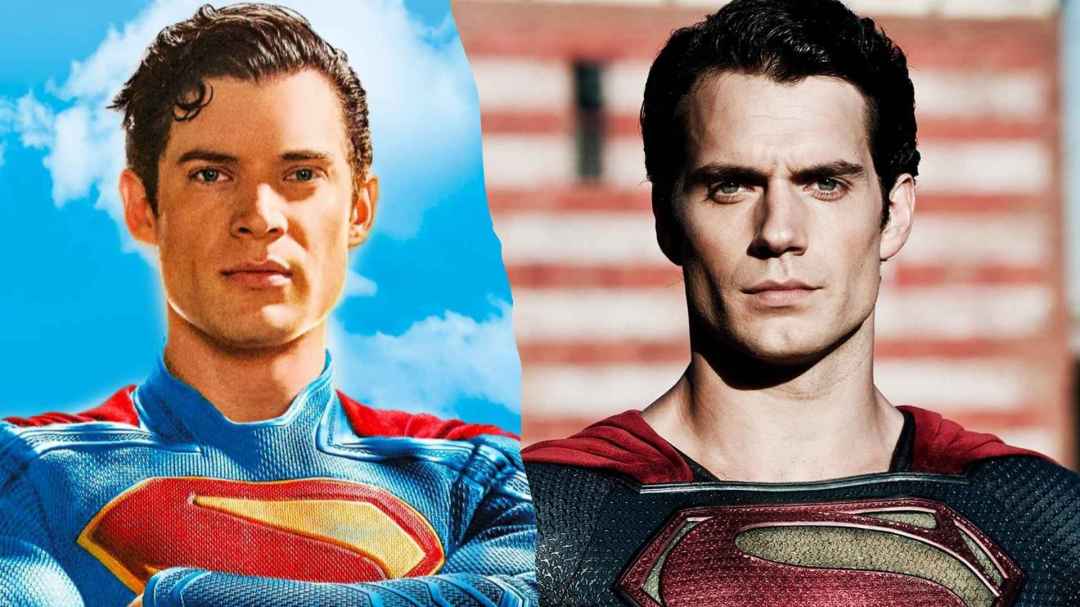
Superman’s back in theaters, and depending on which headline you read, you might think Superman (2025) has already beaten Zack Snyder’s Man of Steel in the financial department. Cleaner profit margins, stronger domestic box office, tighter marketing spend—it looks like a slam dunk, right? But here’s the thing: you can make the case that the new Superman won the short-term battle, but it’s not winning the war. And it simply can’t, not in today’s industry.
Let’s get the hard numbers out of the way. Man of Steel brought in $670.1 million worldwide in 2013. The new movie clocked in at $614 million. Not a disastrous difference, but still, the reboot came up short by over fifty million bucks. And this was after leaning harder into the U.S. market, pulling $353 million domestic compared to Snyder’s $291 million. Good job America, you showed up for the new guy. The problem is that international audiences didn’t. Overseas grosses fell almost $120 million short of what Man of Steel managed, which is a pretty huge gap for a character who’s supposed to be a global icon.
Now yes, profitability is where the new movie looks better on paper. Man of Steel cost about $375 million all-in with production and marketing, and its net theatrical profit was a paltry $42.7 million. That’s couch change compared to the $125 million profit reported for Superman (2025), thanks to slightly leaner marketing and probably better theatrical terms post-COVID. So if you’re just looking at a spreadsheet, sure, you can argue the reboot is the “smarter” movie. It got more bang for its buck. It’s the bean counter’s choice. But that’s not the same thing as being the bigger financial success, because Warner Bros. isn’t running a lemonade stand—it’s running a century-old IP machine. And longevity is the metric that actually matters.
Here’s the reality: Man of Steel had legs. Not in theaters—it dropped like a rock after its opening weekend—but in the marketplace that existed in 2013. Blu-ray was still a thing. DVD was still hanging on. People were buying physical copies of superhero movies because streaming hadn’t yet devoured the aftermarket. That movie pulled in $120 million just from home video sales. It dominated the charts when it dropped. On top of that, Snyder’s Superman had a licensing tsunami behind it: more than 100 brand partnerships that brought in $160 million before the movie even opened. Walmart, Nokia, Chrysler, Gillette—you couldn’t buy a Big Gulp without Superman staring back at you. That ancillary money meant Warner Bros. was practically halfway to profitability before anyone even bought a ticket.
Now compare that to 2025. The new Superman hit digital after 35 days in theaters. Thirty-five days. That’s the world we live in now. Studios aren’t banking on DVDs, they’re trying to drive you to streaming platforms. Which means there’s no long tail, no trickle of money from collectors, no steady drip from re-releases in Blu-ray, 4K, digital bundles. Superman comes out, you watch it, it lands on Max, and that’s it. Maybe it sells some merch. Maybe Funko makes another round of dead-eyed bobbleheads. But it’s not going to pull in an extra quarter-billion from ancillary revenue streams. That pipeline doesn’t exist anymore.
This is why saying Superman (2025) “outperformed” Man of Steel feels like a con. It didn’t. It was more efficient, sure. It did better with the money it had. But if you zoom out even a little, Man of Steel dwarfs it. Over $950 million in combined theatrical, home video, and licensing revenue. That’s the number Warner Bros. actually cared about. It was enough to justify launching an entire shared universe, even if that universe imploded under its own weight. Ten years from now, when we look back, Snyder’s Superman will still have made more money.
Of course, it’s not exactly fair to beat the new film over the head with that comparison. The industry has changed. We’re in a post-Writer’s Strike, post-COVID marketplace where the theatrical window is short, attention spans are shorter, and franchises are built for churn rather than legacy. Warner Bros. knows this. That’s why they didn’t wait around after Superman (2025). They’ve already planted the flag for The Man of Tomorrow in 2027. They’re not banking on a decade of after-market cash—they’re keeping the ball rolling, trying to strike while people still care.
And here’s where the cynicism meets optimism. Because yeah, Superman still isn’t the draw WB wants him to be. He’s iconic but he’s not Spider-Man, not Batman, not even close to Marvel’s ensemble cash cows. If Superman (2025) had the Marvel logo slapped in front, it would’ve cracked a billion. But it didn’t, and it won’t. That’s the ceiling right now. But—and this is a big but—James Gunn and Peter Safran actually seem to get it. Gunn’s take on Superman feels different. It feels alive in a way that even Snyder’s operatic vision didn’t. It’s bright, it’s curious, it’s got some bite to it. And for the first time in years, I’m not rolling my eyes when WB announces another Superman movie. I’m actually curious to see where it goes.
So yeah, Superman (2025) won the battle for profitability, but Man of Steel still owns the war for overall financial impact. The reboot can’t match the long tail, it can’t match the home video era, it can’t match the once-in-a-generation wave of brand partnerships Snyder’s film pulled in. But maybe that’s okay. Maybe this isn’t about winning the same war. Maybe this is about starting a new one, with a Superman who finally feels like he belongs in the 21st century.

 Hollywood After Dark